
Section 1: Earth’s Interior
Geologists use two main types of evidence to study Earth’s interior: direct evidence from rock samples and indirect evidence from seismic waves. Scientists drill deep holes into Earth’s crust to collect rock samples. These samples provide direct information about the rocks beneath Earth’s surface. Geologists also rely on indirect evidence from seismic waves produced by earthquakes. By measuring how fast these waves travel through Earth, scientists can learn about the structure and composition of the layers inside our planet.
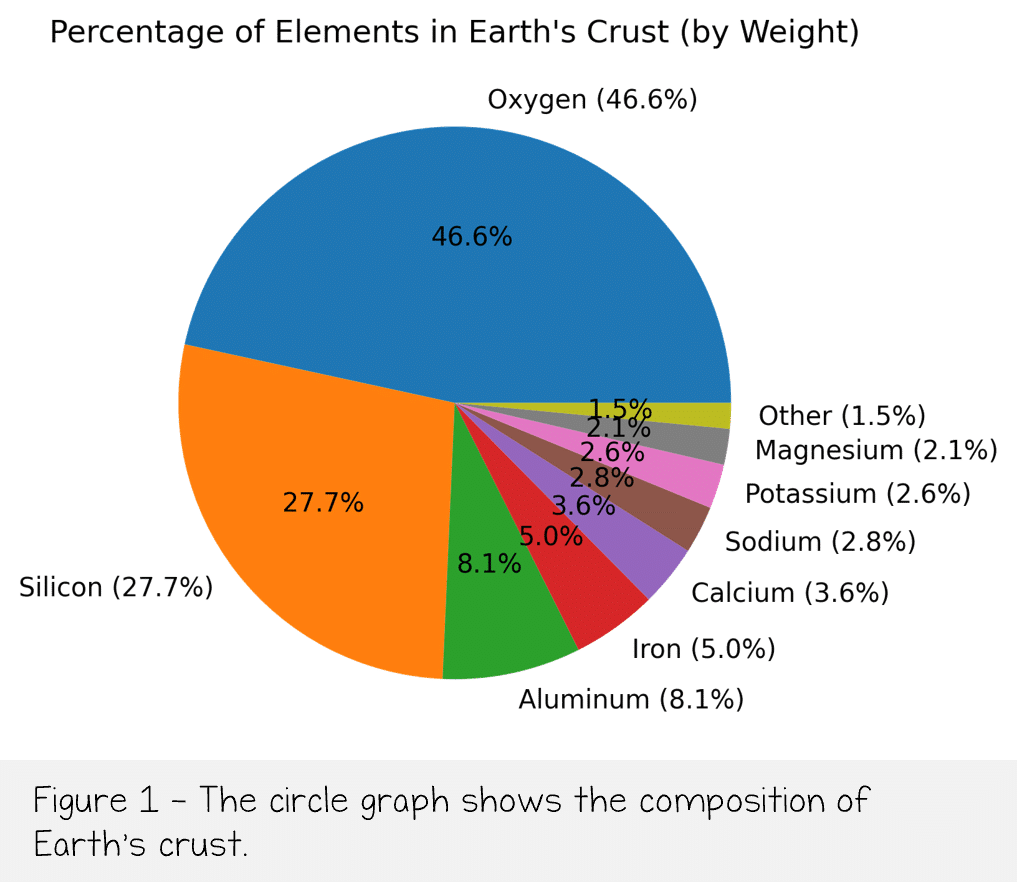 Earth is made up of three main layers that differ in size, composition, temperature, and pressure. The outermost layer is the crust, which forms Earth’s thin, rocky “skin.” The crust that lies beneath the ocean floor is called the oceanic crust and is made mostly of basalt. The continental crust—the crust that forms the continents—is composed of many types of rocks, but mainly granite. No matter the type of rock, the crust is made from a small group of common elements. Together, oxygen and silicon account for nearly three-fourths of the crust.
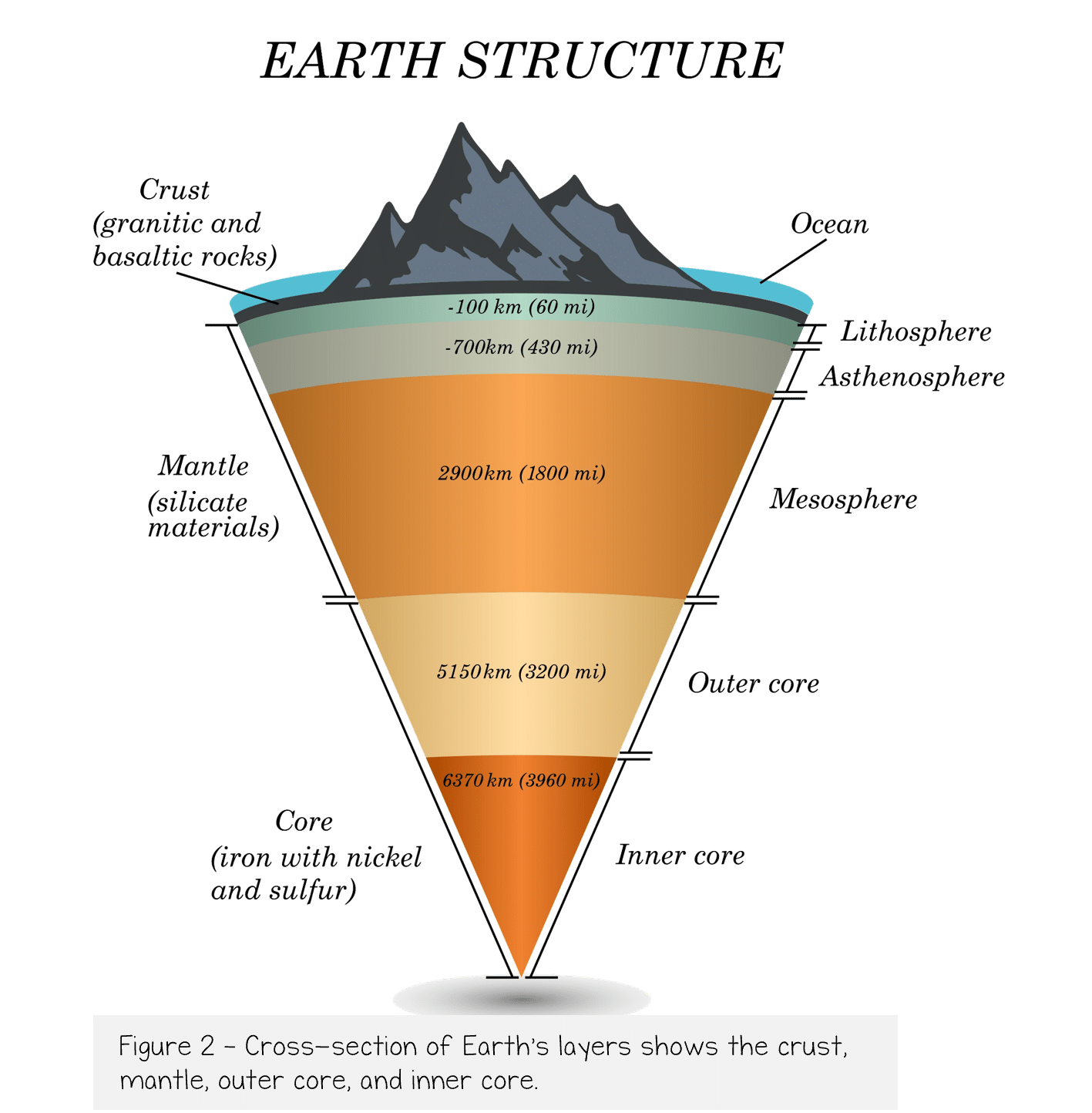 Beneath the crust lies the mantle, Earth’s thickest layer. It begins about 40 kilometers below the surface and is made of hot, solid rock. Scientists divided the mantle into layers based on their physical characteristics. The lithosphere is Earth’s rigid outer layer. It includes both the crust and the uppermost part of the mantle, forming a solid shell about 100 kilometers thick. This layer is broken into large pieces called tectonic plates, which move slowly over time. Beneath the lithosphere lies the asthenosphere, a hotter, softer layer of the mantle. Although it is made of solid rock, the extreme heat and pressure allow it to behave like a thick, slow-moving plastic. This ability to flow very slowly enables the tectonic plates above it to move.
Below the asthenosphere lies the lower mantle, which extends down to the outer core. The lower mantle is made of solid rock that is under tremendous heat and pressure. Even though temperatures are extremely high, the intense pressure keeps the material in a solid state.
At the center of the Earth is the core. Earth’s core is divided into two parts: the outer core and the inner core. Both layers are made mostly of the metals iron and nickel, and both are extremely hot and very dense. The outer core is made of liquid iron and nickel. It is so hot that the metals remain molten, or liquid. The movement of this liquid metal creates convection currents, which generate Earth’s magnetic field. The inner core is made of solid iron and nickel. Even though it is hotter than the outer core, the inner core remains solid because the pressure at Earth’s center is extremely high.
Review:
- What types of evidence do geologists use to learn about Earth’s interior?
- What does the mantle consist of?
- Compare the inner core to the outer core.