
Section 2: Convection in the Mantle
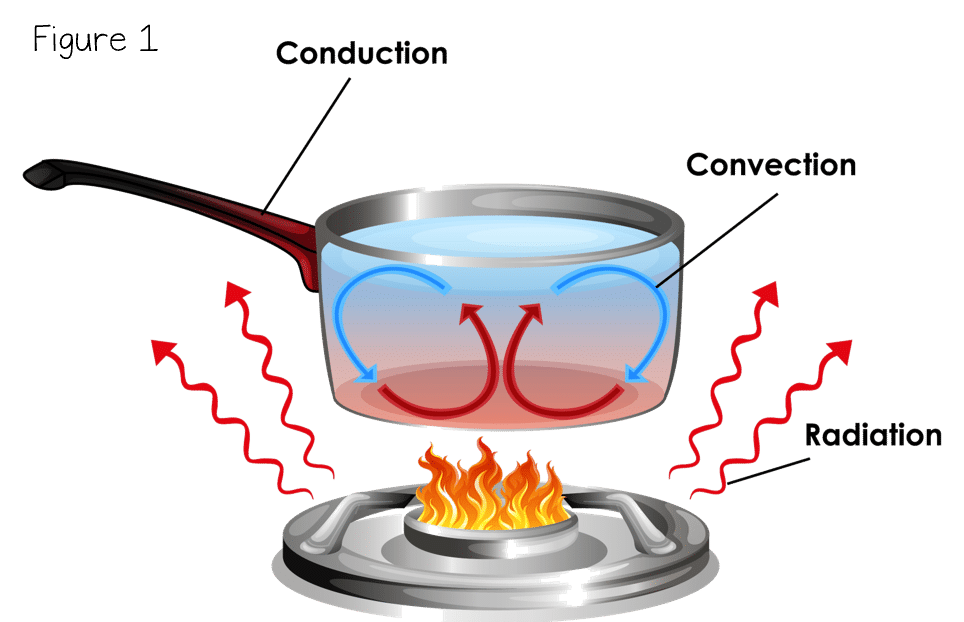 To explain how heat moves from the Earth’s core through the mantle, you need to know how heat is transferred. There are three types of heat transfer: radiation, conduction, and convection. Radiation is the process of energy transfer through space without direct contact between the heat source and an object. In Figure 1, heat from the flame travels outward as energy waves, warming the pot. This is similar to how sunlight warms Earth’s surface.
Conduction occurs when heat is transferred through direct contact with the particles of matter. In Figure 1, the metal pot becomes hot because it is sitting directly on the flame. Heat moves from the hot burner into the bottom of the pot and then through the metal handle. When a warmer object touches a cooler one, heat flows from the warmer to the cooler one until both reach the same temperature, a state called thermal equilibrium.
Convection is the process of heat transfer through the movement of heated fluid, which can include both liquids and gases. This type of heat transfer occurs due to temperature and density differences within a fluid. Density refers to the amount of mass there is in a given volume of a substance. When the water is heated on a stove, the water at the bottom heats up and expands, becoming less dense as it rises. As surface water warms and becomes less dense, it descends, creating a convection current that facilitates heat transfer.
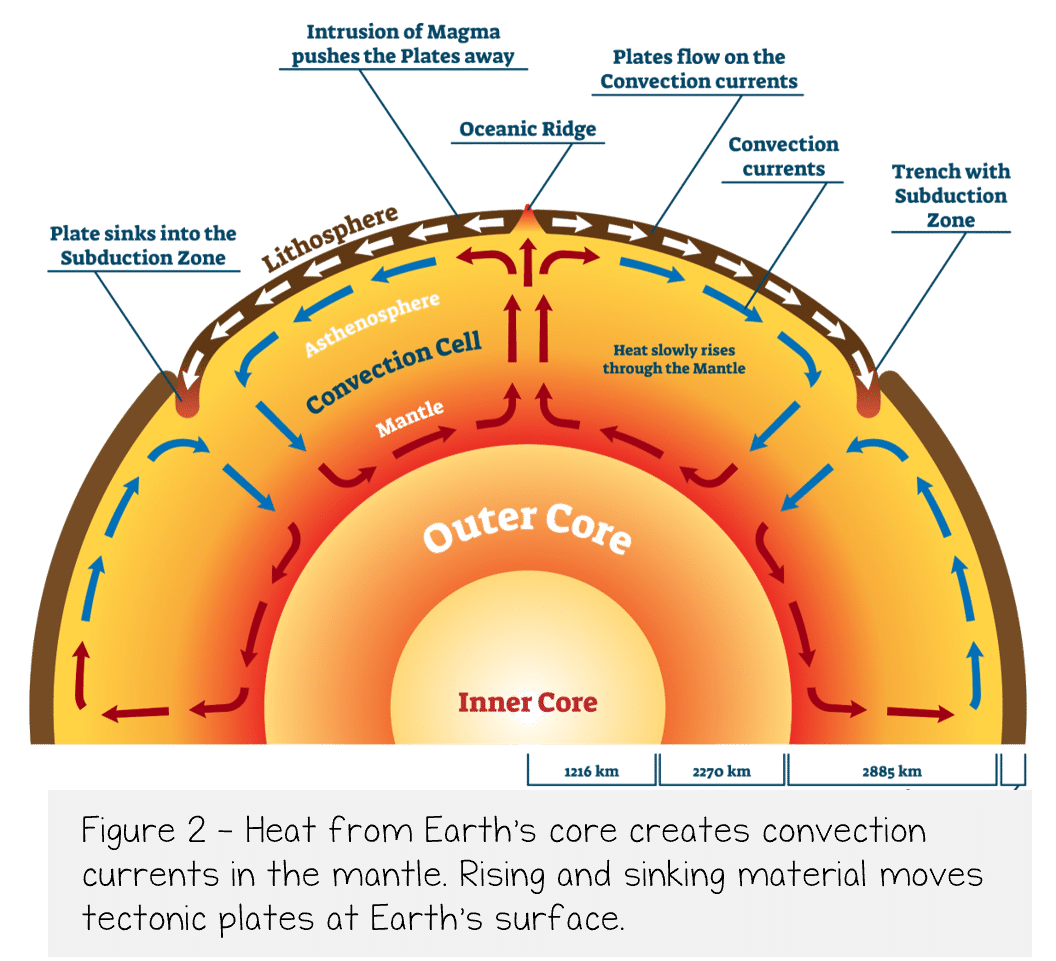
Convection currents within the mantle are driven by heat originating from Earth’s core and the mantle itself. For the past four billion years, these currents have acted as a conveyor belt, moving the lithosphere above. This movement of tectonic plates causes earthquakes, volcanic eruptions, and the formation of mountains.
Convection currents within the mantle are driven by heat originating from Earth’s core and the mantle itself. For the past four billion years, these currents have been acting like a conveyor belt, moving the lithosphere above. This movement of tectonic plates has led to earthquakes, volcanic eruptions, and the formation of mountains.
Review:
- What are the three types of heat transfer?
- What is a convection current?