
Section 4: Newton’s Laws of Motion
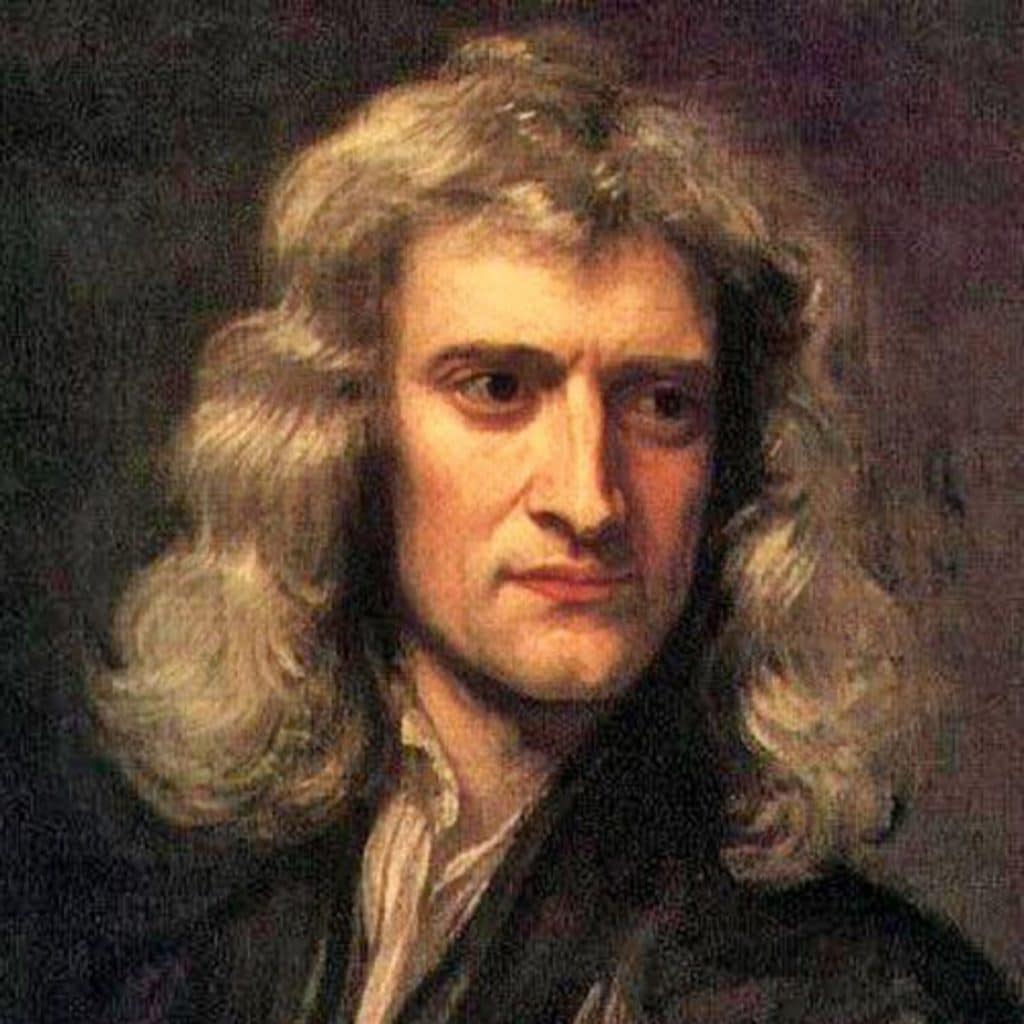
Scientist Isaac Newton developed three laws of motion that explain how forces affect the movement of objects. These laws help scientists understand everything from why seatbelts protect passengers to how rockets launch into space. The examples shown in the image below demonstrate how forces can cause objects to start moving, stop moving, speed up, slow down, or change direction.
Newton’s first law of motion states that an object at rest will remain at rest, and an object in motion will continue moving at a constant velocity unless acted on by an unbalanced force. This law is often called the law of inertia. Inertia is the tendency of an object to resist changes in its motion. In the image, the crate remains at rest until a person pushes it with enough force to overcome friction. Once the crate is moving, it will continue moving unless another force, such as friction or another push, changes its motion.
Newton’s second law of motion explains how force, mass, and acceleration are related. The law states that an object accelerates in the direction of the net force acting on it. In the image, the car accelerates forward when a force is applied. The amount of acceleration depends on both the size of the force and the mass of the object. A small car will generally accelerate more easily than a large truck if the same force is applied because the truck has more mass.
Newton’s third law of motion states that for every action force, there is an equal and opposite reaction force. In the image, the two skaters push against one another. When one skater pushes forward, the other skater pushes back with an equal force in the opposite direction. As a result, both skaters move apart. Action-reaction force pairs always occur together and act on different objects.

Newton’s laws also help explain momentum. Momentum is the product of an object’s mass and velocity. Objects with greater mass or greater velocity have more momentum. Momentum can be transferred from one object to another during collisions. For example, when one billiard ball strikes another billiard ball, momentum transfers from the moving ball to the stationary ball, causing the second ball to move. The total momentum of the system remains conserved unless outside forces act on it.
Together, Newton’s laws of motion explain how and why objects move the way they do, helping scientists and engineers design safer vehicles, sports equipment, roller coasters, and transportation systems.
Review:
- Explain Newton’s first law of motion.
- Define inertia.
- Explain Newton’s third law of motion.