
Section 5: Gravity
Gravity is a force that every object in the universe exerts on every other object. Although gravity acts between all objects, it is most noticeable when large objects, such as planets or moons, attract smaller objects toward them. On Earth, gravity pulls objects toward the ground, giving objects weight and keeping planets, moons, and satellites in orbit.
The strength of the gravitational force depends on two main factors: mass and distance. Objects with greater mass exert a stronger gravitational pull than objects with smaller mass. Distance also affects gravity because the farther apart two objects are, the weaker the gravitational force between them becomes. For example, Earth’s large mass creates a strong enough gravitational force to keep people, oceans, and the atmosphere from drifting into space.
Weight is a measure of the gravitational force acting on an object and is measured in units called newtons (N). An object with more mass will have greater weight because gravity pulls more strongly on it. However, weight can vary by location. For example, an astronaut would weigh less on the Moon than on Earth because the Moon has less mass and therefore a weaker gravitational pull.
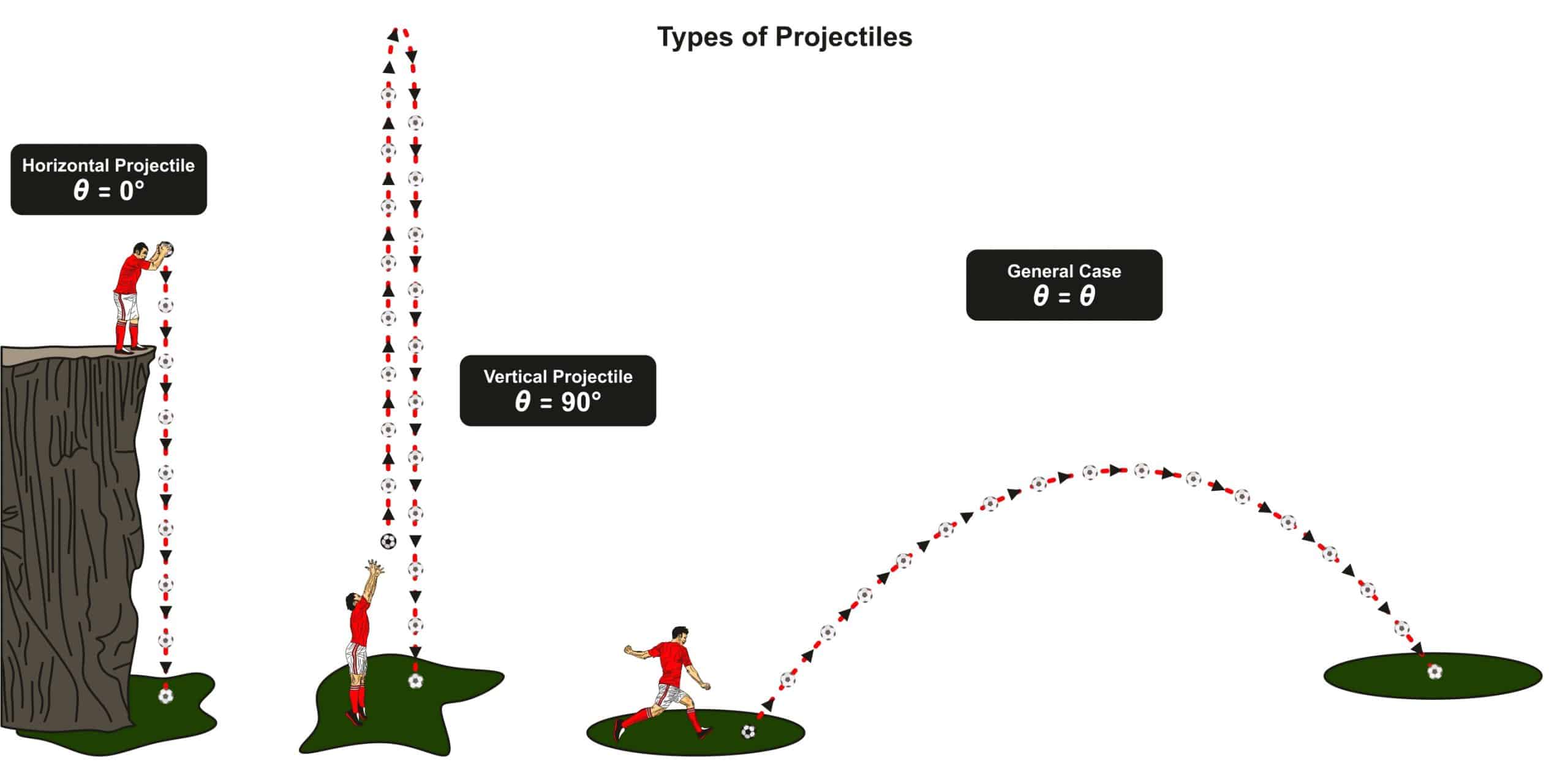
Gravity also affects the motion of objects traveling through the air. If you throw or kick a ball, it follows a curved path called a trajectory. The shape of the trajectory depends on the object’s speed, the angle at which it is launched, and the pull of gravity. A projectile is any object that is thrown or launched through the air and moves mainly under the influence of gravity after it is released. Examples of projectiles include footballs, basketballs, arrows, and fireworks.
Projectiles experience both horizontal motion and vertical motion at the same time. Horizontal motion carries the object forward, while vertical motion is affected by gravity pulling the object downward. Together, these motions create the curved path seen in projectile motion. For example, a soccer ball kicked at an angle rises into the air, slows as gravity pulls it downward, and eventually falls back to the ground.
Another important type of motion influenced by forces is circular motion. Centripetal force is the force directed toward the center of a curved or circular path. The word centripetal means “center-seeking.” Without centripetal force, an object moving in a circle would continue traveling in a straight line because of inertia.
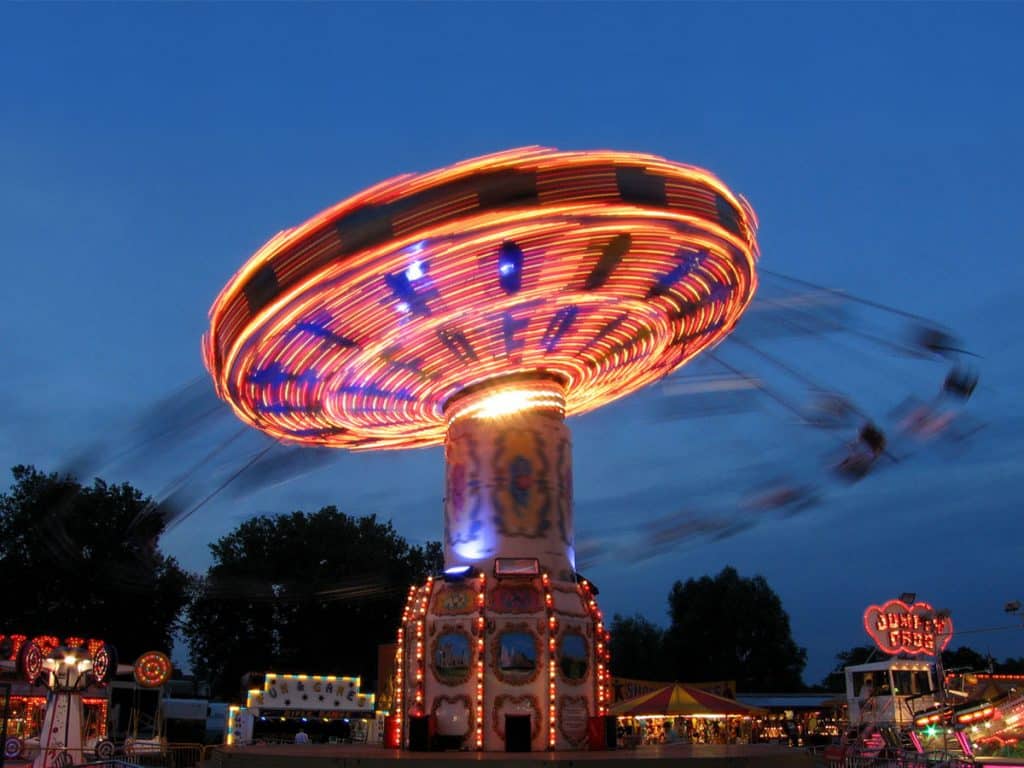
The amusement park ride shown in the image below illustrates centripetal force in action. As the ride spins, the chains pull the swings inward toward the center. This inward pull acts as the centripetal force that keeps the riders moving in a circular path instead of flying outward in a straight line. The faster the ride spins, the greater the centripetal force needed to keep the riders moving in a circle. Riders may feel as if they are being pushed outward, but the actual force causing the circular motion is directed inward toward the center of the ride. Similarly, when a car turns around a curve, friction between the tires and the road provides the centripetal force needed to keep the car moving along the curved path. Gravity also acts as a centripetal force, keeping planets orbiting the Sun and moons orbiting their planets.
As an object moves in a circular path, it also experiences centripetal acceleration, which is acceleration directed toward the center of the circle. Even if the object’s speed remains constant, the direction of motion is constantly changing, meaning the object is accelerating. Understanding gravity, projectile motion, and circular motion helps scientists explain everything from sports and amusement park rides to satellite orbits and planetary motion.
Review:
- What two things does gravitational force depend on?
- Define projectile.
- Explain centripetal force.