
Section 3: Climates of Earth
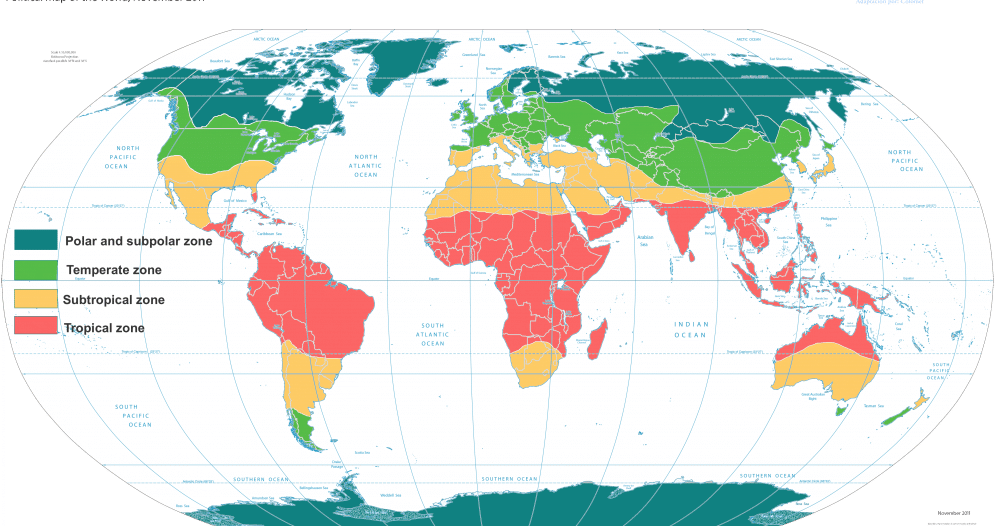
Climate describes the long-term average weather conditions of a particular region, including temperature and precipitation patterns over many years. Scientists classify climates using a system developed by Wladimir Köppen around 1900. The Köppen climate classification system groups regions based mainly on their average temperature and precipitation patterns. Using these factors, climates are divided into five main regions: tropical, dry, temperate marine, temperate continental, and polar. Climate patterns in these regions are also influenced by air masses. Maritime air masses, which form over oceans, usually carry moist air, while continental air masses, which form over land, tend to be drier.
A tropical climate occurs near the equator and is known for year-round warm temperatures and abundant rainfall. Tropical regions often contain dense forests called rainforests, such as the Amazon Rainforest in South America. Some tropical areas experience both wet and dry seasons, known as tropical wet-and-dry climates. These areas receive less rainfall overall and support ecosystems such as savannas and tropical grasslands, which are home to animals like elephants, zebras, and lions.
In contrast, a dry climate receives very little precipitation. These regions typically have hot summers and cooler winters. Arid regions, or deserts, receive less than about 25 centimeters of rain per year. Examples include the Sahara Desert in Africa and the Mojave Desert in the southwestern United States. Areas surrounding deserts often have a semiarid climate, also called steppes. These regions receive slightly more rainfall, allowing short grasses and small plants to grow. The Great Plains of North America provide an example of a semiarid steppe region.
A temperate marine climate is generally humid and influenced by nearby oceans, resulting in moderate temperatures. For example, the marine west coast climate found in places like the Pacific Northwest of the United States and parts of western Europe has moist air that brings cool, rainy summers and mild, rainy winters. Another type of temperate marine climate is the humid subtropical climate, which is warm and wet but not as hot as tropical climates. This climate is common in the southeastern United States and parts of eastern Asia. The Mediterranean climate, found in areas such as southern Europe and coastal California, has warm, dry summers and mild, rainy winters.
A temperate continental climate occurs mainly in the Northern Hemisphere, where large landmasses allow temperatures to vary widely between seasons. Regions with this climate, such as parts of the northern United States, Canada, and eastern Europe, experience warm summers and cold winters. Farther north, the subarctic climate has even more extreme seasonal differences, with short, cool summers and long, bitterly cold winters. Forests of hardy evergreen trees often grow in these cold regions. Large areas of Canada and Siberia have this climate.
Finally, the polar climate is the coldest climate region on Earth. Polar areas remain at or below freezing for most of the year. Ice cap climates, found in Antarctica and Greenland, are covered by thick ice sheets and receive very little precipitation. The tundra climate, found in northern Alaska and northern Canada, has short, cool summers followed by long, bitterly cold winters. Because of the cold temperatures and frozen ground, only small plants such as mosses and lichens can survive there.
Review:
- Identify three characteristics of tropical climates.
- Identify three characteristics of dry climates.
- Identify three characteristics of temperature marine climates.