
Section 3: Cycles in Nature
The movement of water, carbon, nitrogen, and phosphorus through living and nonliving parts of the environment is called a biogeochemical cycle. These cycles are powered by the flow of energy and involve the continuous recycling of matter within and between ecosystems. Through these processes, the biological, geological, and chemical components of the biosphere are interconnected.
Biogeochemical cycles include three main types of processes.
- Biological processes are carried out by living organisms and include activities such as eating, breathing, and eliminating waste.
- Geological processes involve the movement of matter within and below Earth’s surface, such as the formation of rocks and the movement of tectonic plates.
- Chemical processes involve the formation and transformation of substances, such as the creation of clouds and the movement of water through the environment.
In the water cycle, water continuously moves between the atmosphere and Earth, as well as between living and nonliving parts of the environment. The sun is the primary energy source that drives this cycle.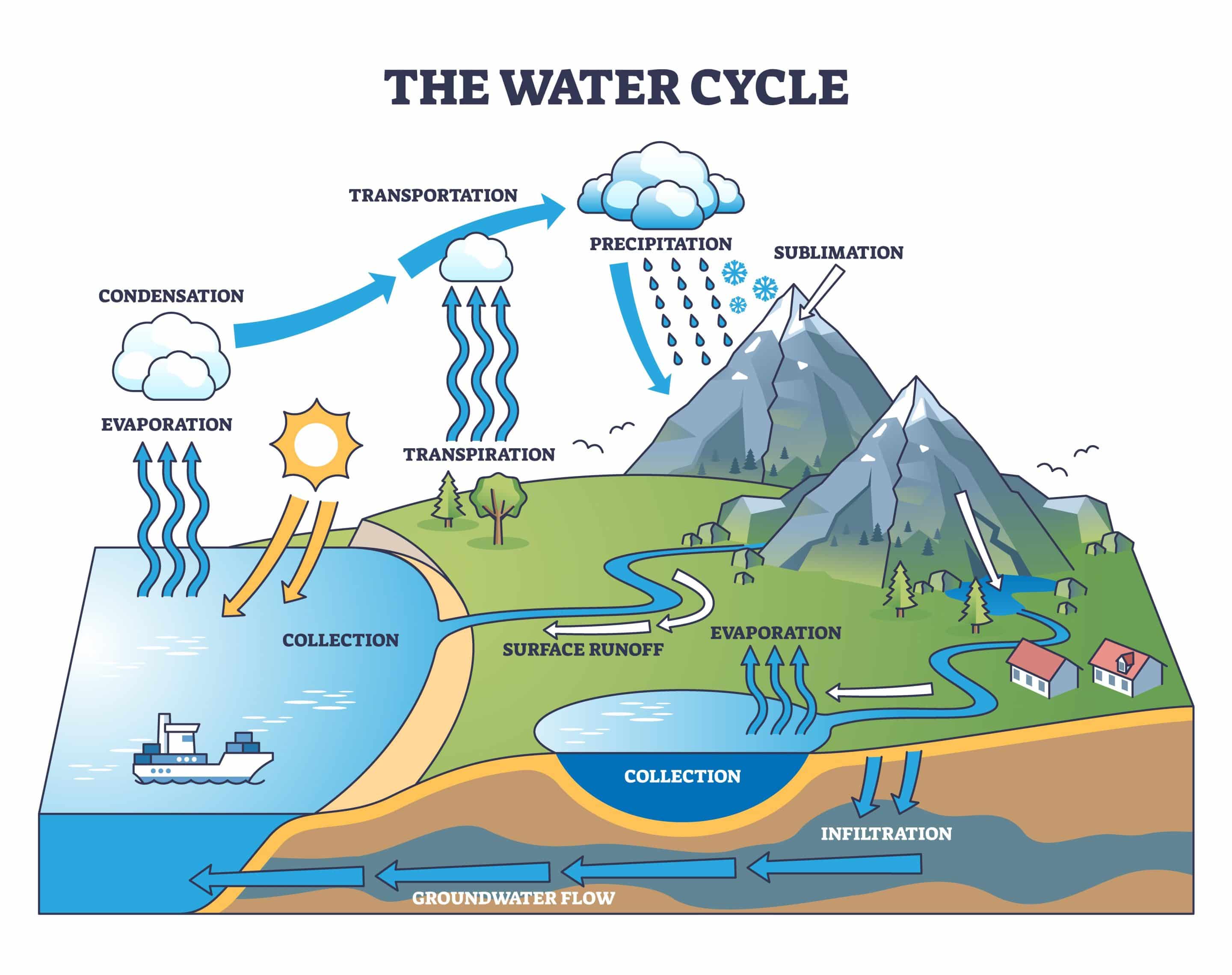
Water evaporates from oceans, lakes, and other bodies of water, becoming water vapor. As the water vapor rises and cools, it undergoes condensation, forming clouds. When the droplets in clouds become large and heavy enough, they fall back to Earth as precipitation, which can include rain, snow, or ice. Living organisms also play a role in the water cycle. Plants absorb water through their roots and release water vapor into the air through a process called transpiration.
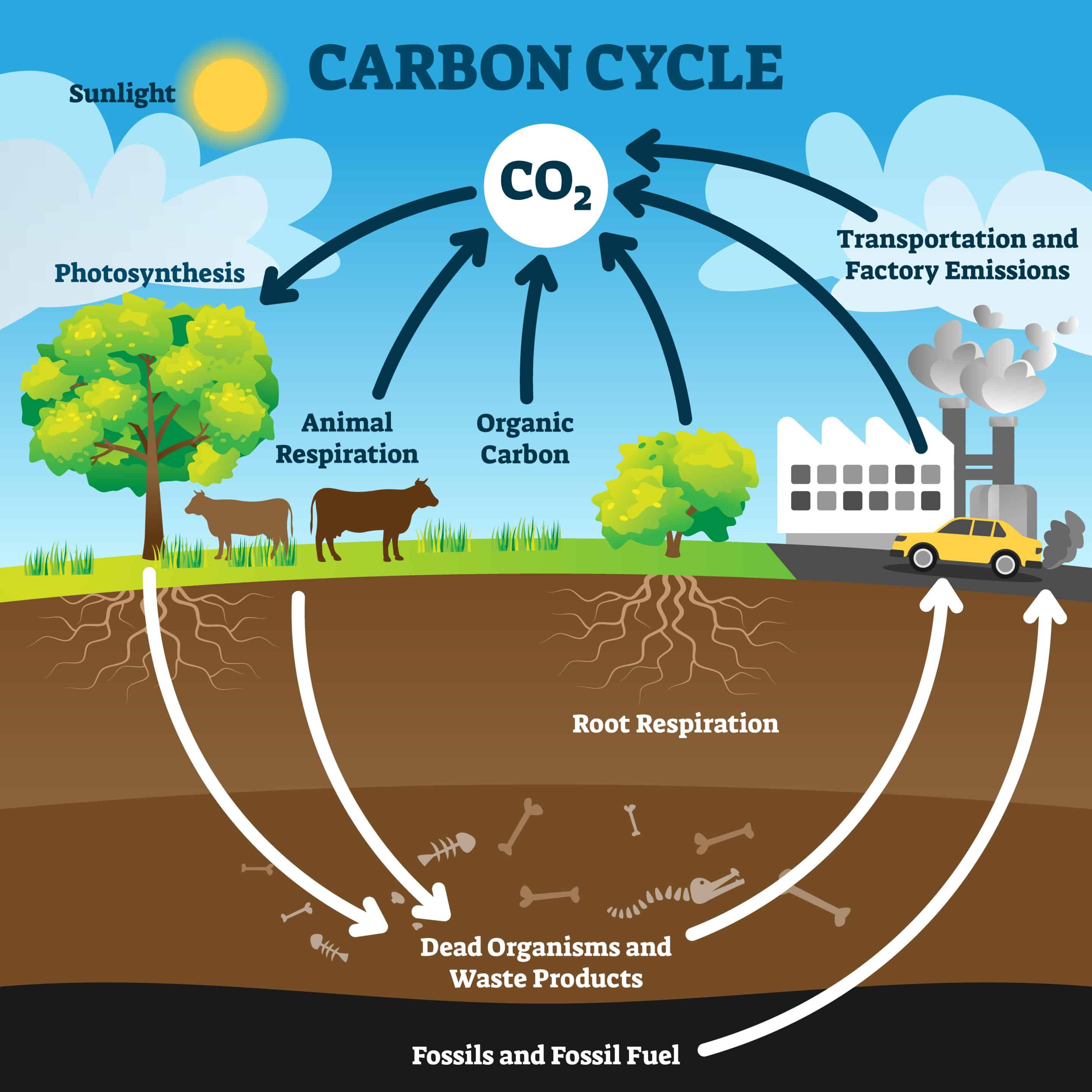
All life is based on carbon, and all living organisms depend on it. The carbon cycle describes how carbon moves between living organisms and the atmosphere. During photosynthesis, autotrophs use energy from the sun to convert carbon dioxide (CO₂) into energy-rich carbon compounds. Heterotrophs obtain this carbon by consuming other organisms and use it for growth and survival. As organisms carry out life processes such as respiration, carbon is released back into the atmosphere as CO₂. Carbon is also stored in the ground through processes such as erosion, volcanic activity, and in fossil fuels like coal, oil, and natural gas. Human activities, including mining, deforestation, and the burning of fossil fuels, release large amounts of carbon dioxide into the atmosphere, contributing to global warming.

Like water and carbon, nitrogen is continuously recycled through the environment in the nitrogen cycle. Although about 78% of Earth’s atmosphere is nitrogen gas, most plants cannot use it in this form. Soil bacteria convert nitrogen gas into usable forms through a process called nitrogen fixation, allowing plants to take it in and use it to build proteins. Animals obtain nitrogen by eating plants or other animals and use it to form proteins needed for growth, including muscles and blood cells. When organisms produce waste or die, decomposers return nitrogen to the soil, where it continues to cycle between the soil, living organisms, and the atmosphere.
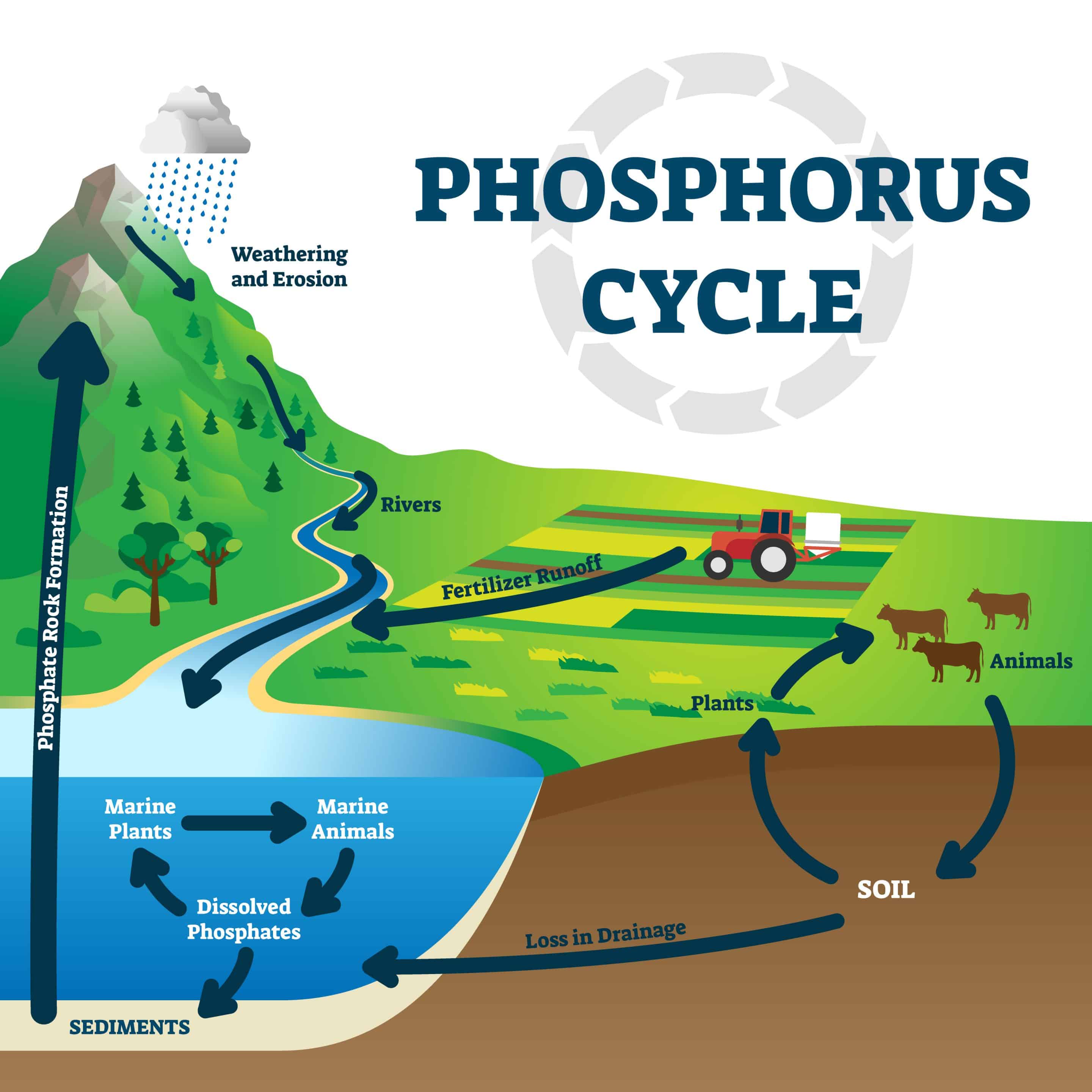
The phosphorus cycle moves phosphorus through land, ocean sediments, and living organisms. Phosphorus is an essential element for all living things, but unlike other cycles, it does not enter the atmosphere in significant amounts. Phosphorus cycles primarily through soil and water. Plants absorb phosphorus from the soil, and animals obtain it by eating plants or other animals. When organisms produce waste or die, decomposers return phosphorus to the soil, where it can be used again. Phosphorus is also stored in rocks and sediments. Over time, weathering and erosion break down these rocks, releasing phosphorus back into the environment and continuing the cycle.
Review:
- What four processes cycle matter through the biosphere?
- What processes are involved in the water cycle?
- Identify one way carbon dioxide is removed from the atmosphere.