
Section 1: The Method of Science

Science is a process people use to gain knowledge about the natural world. It involves making observations, asking questions, investigating, and using evidence to explain what happens in nature. Science helps us understand how and why things happen. Scientists use what they learn to make predictions about future events.
There are three main branches of science: life science (the study of living things), earth science (the study of earth and space), and physical science (the study of matter and energy).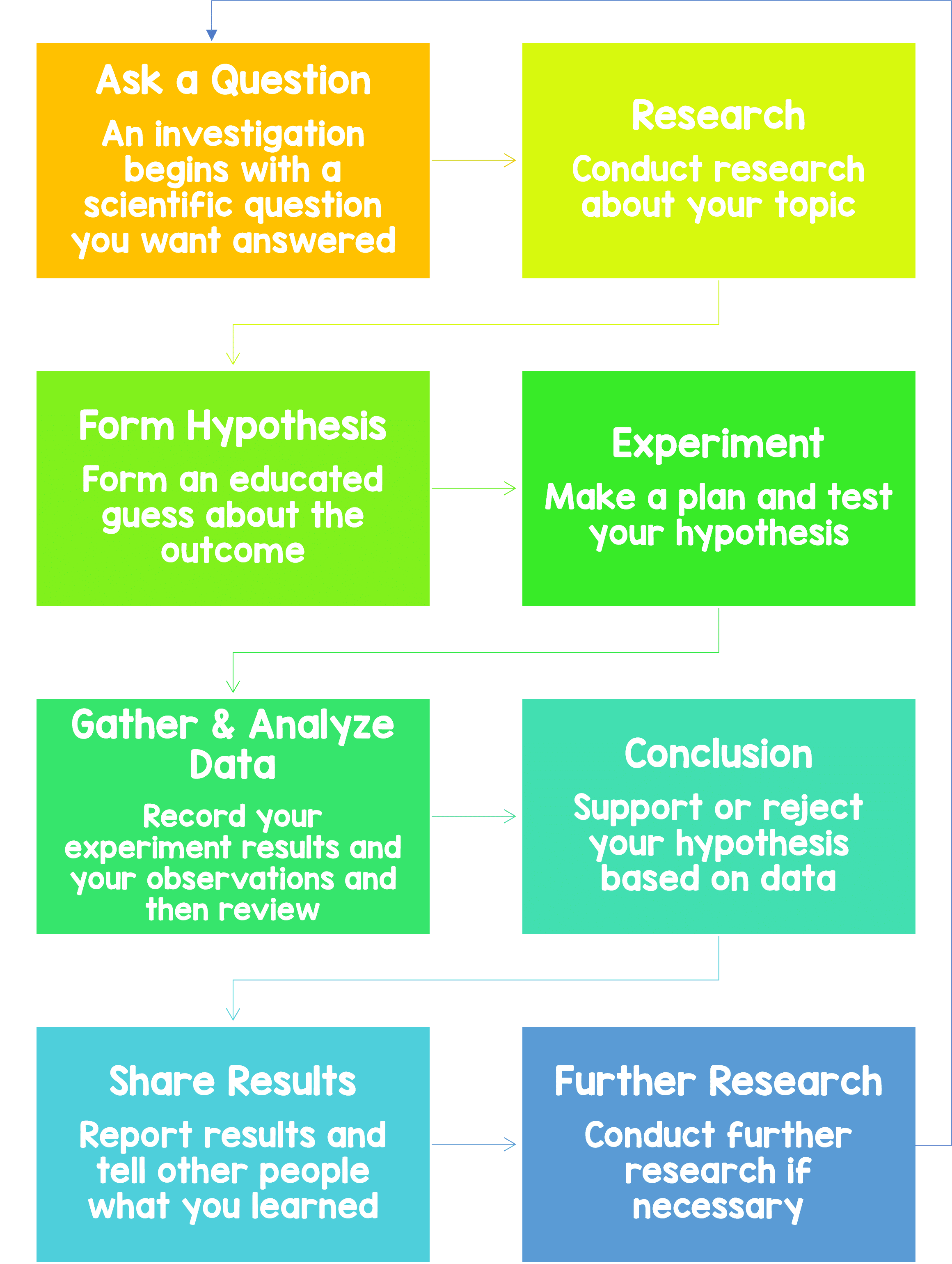
When scientists pose a question or design an experiment, they follow an organized set of steps called the scientific method. The scientific method helps keep investigations fair, clear, and logical.
First, a scientist makes an observation that leads to a question about how or why something occurs. Next, the scientists forms a hypothesis, an educated guess or testable prediction. A hypothesis is often written as an “If….then…” statement.
After forming a hypothesis, the scientists conduct an experiment to test it. The experiment must include a clear procedure so that others can repeat it. A control is used as a standard for comparison. Without a control, it would be hard to know if the results were caused by the variable being tested. A constant is something that stays the same throughout the experiment.
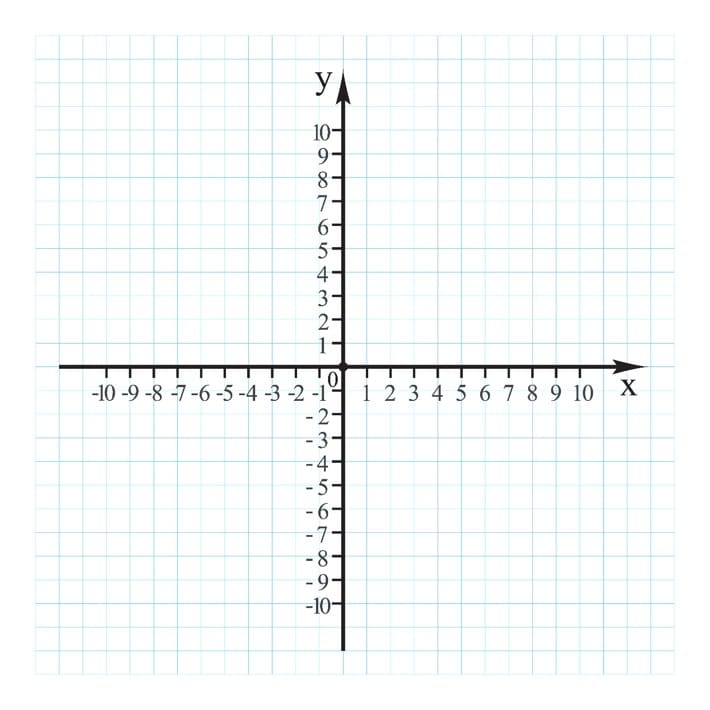 There are also two important types of variables: independent and dependent. The independent variable is the factor the scientist controls, and it appears on the x-axis when graphing data. The dependent variable is a factor that responds to the change, and it’s found on the y-axis.
Once the experiment is complete, the scientist collects and analyzes the data. Based on the evidence, they draw a conclusion about whether or not the hypothesis was supported.
Evidence from research leads scientists to propose scientific theories or explanations based on experiments. A scientific theory is a logical explanation based on data, not a guess. For example, when you are playing the game Clue, you might say, “I have a theory that Colonel Mustard killed Mrs. Peacock in the study with the wrench.” When a scientist talks about a theory, like the black hole theory, they are referring to a well-tested explanation based on observations, research, and data. A scientific law is a rule of nature that sums up the related observations to describe a pattern in nature, and it is true all the time. For example, the law of gravity describes the predictable attraction between objects with mass.
Science is always growing and improving. As new evidence is discovered, explanations may be refined or updated, which is what makes science such a powerful and reliable way to understand the world around us.
Review:
- What is a hypothesis?
- On what axis is the independent variable plotted?
- Explain the difference between a scientific theory and scientific law.