
Section 3: Human Genetic Disorders
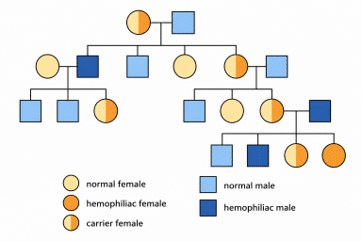 Sometimes changes in DNA or chromosomes can be passed from parents to their children, leading to inherited conditions known as genetic disorders. These disorders can be caused by mutations in DNA or by changes in the overall structure or number of chromosomes. Geneticists often use a pedigree, a diagram or family tree that shows how traits are passed down through generations. Pedigrees help identify patterns of inheritance and determine the likelihood that a trait or disorder will be passed on to offspring. Families may also seek guidance from a genetic counselor, a specialist who helps assess the risk of inherited conditions.
One important tool used by genetic counselors is a karyotype, which is a picture of all the chromosomes in a person’s cells. To create a karyotype, chromosomes are viewed under a microscope, then arranged, counted, and photographed. A typical human karyotype shows 23 pairs of chromosomes. The first 22 pairs are autosomes, and the 23rd pair determines an individual’s sex. Karyotypes can help detect chromosomal disorders by revealing whether a person has the correct number of chromosomes.
An abnormal number of chromosomes can lead to several genetic disorders. For example, Down syndrome, also called Trisomy 21, occurs when there is an extra copy of chromosome 21. The term trisomy refers to the presence of three copies of a chromosome instead of two. Edwards syndrome, or Trisomy 18, occurs when there are three copies of chromosome 18. Turner syndrome occurs only in females and results when one of the sex chromosomes is missing or incomplete, leaving only a single X chromosome.
Review:
- What is a genetic disorder?
- How is a karyotype useful?
- Identify and explain one type of genetic disorder.