
Section 2: The Genetic Code
DNA is found in nearly every cell in the body, including blood, skin, and hair cells. It is organized into structures called chromosomes, which contain many smaller segments known as genes. A gene is a section of DNA that carries the instructions for making a specific protein. These proteins determine a cell’s characteristics and help control how cells function and reproduce. In this way, DNA stores, copies, and transmits genetic information.
DNA is a type of nucleic acid made up of repeating units called nucleotides, which join together to form long strands. The instructions in DNA are determined by the order of four nitrogen bases: adenine (A), thymine (T), guanine (G), and cytosine (C). The sequence of these bases forms the genetic code, which tells the cell which proteins to produce.
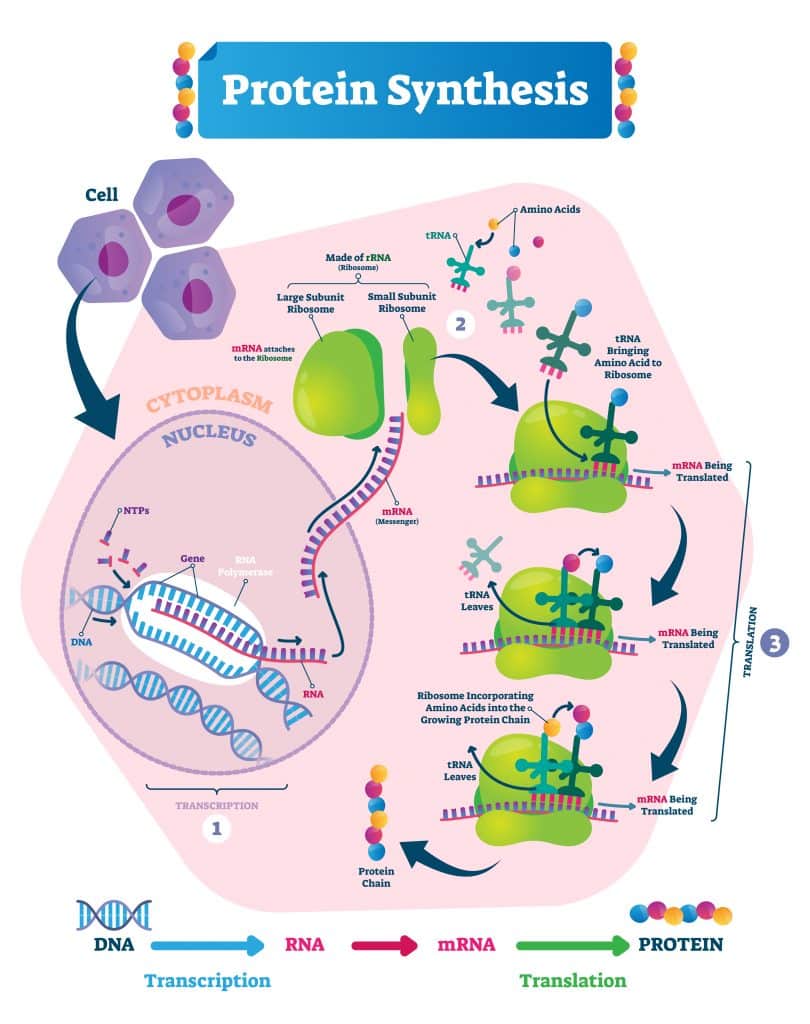
RNA (ribonucleic acid) acts as a messenger, carrying genetic information from DNA in the nucleus to the cytoplasm, where proteins are made. While RNA is similar to DNA, it has one key difference: instead of thymine, RNA contains the base uracil (U). This allows RNA to carry out DNA’s instructions and help build proteins.
There are two main types of RNA involved in protein production. Messenger RNA (mRNA) copies the genetic information from DNA and carries it from the nucleus to ribosomes in the cytoplasm. The instructions it carries are used to build a specific protein.
Transfer RNA (tRNA) molecules are smaller and play a different role. While mRNA carries the instructions, tRNA brings the correct amino acids to the ribosome. It matches each amino acid to its mRNA codon and adds it to the growing protein chain, assembling the protein step by step.
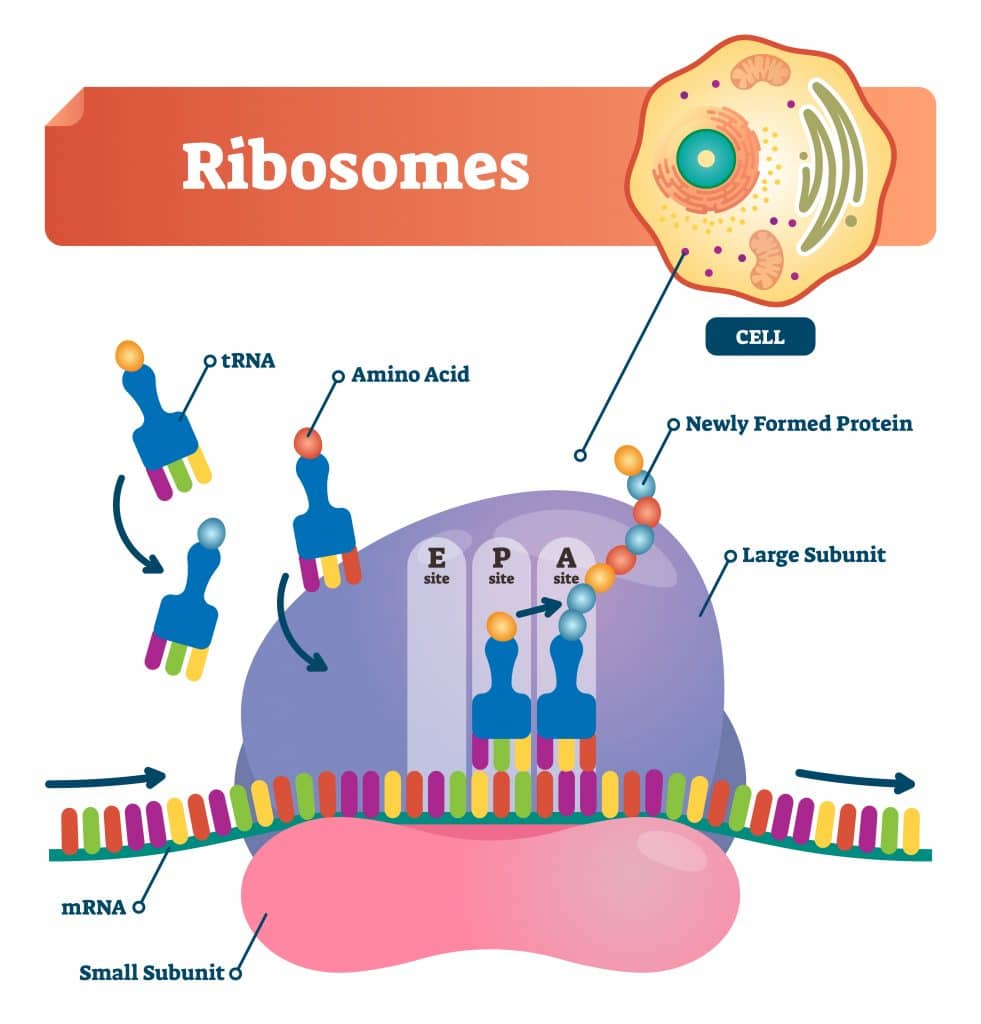
During protein synthesis, the genetic information in DNA is first transcribed into a messenger RNA (mRNA) strand. The mRNA then leaves the nucleus through nuclear pores and attaches to a ribosome in the cytoplasm. The ribosome uses the mRNA as a set of instructions for building a protein. Next, transfer RNA (tRNA) molecules bind to the mRNA. Each tRNA carries a specific amino acid and matches its base sequence to the corresponding code on the mRNA. As the ribosome moves along the mRNA strand, tRNA continues to deliver the correct amino acids. These amino acids are then linked together in the correct order, forming a polypeptide chain. The sequence of amino acids is determined by the order of bases on the mRNA. Finally, once the chain is complete, the ribosome releases the finished protein. The protein may be used within the cell or transported to other parts of the body.
A mutation is any change in a gene or chromosome. For example, if a cell makes an error while copying its DNA, the daughter cells may inherit DNA that differs from the original. Once a mutation occurs, it can be passed on to future cells when the cell divides. Mutations can occur in several ways. A substitution happens when one base is replaced by another. A deletion occurs when one or more bases are removed, leaving a gap in the DNA sequence. An addition happens when one or more bases are added to the DNA sequence. These changes can alter the genetic code and may affect how a protein is made.
Review:
- Where can DNA be found?
- Compare Messenger RNA and Transfer RNA.
- Identify three different ways mutations can occur.