
Section 1: The Discovery of Cells

Cells are the smallest and most basic units of life. They form the foundation of all living things. Some organisms, such as bacteria, consist of just one simple cell, while plants and animals are made of many more complex cells. For much of human history, however, cells remained unknown because they are too small to be seen with the naked eye.
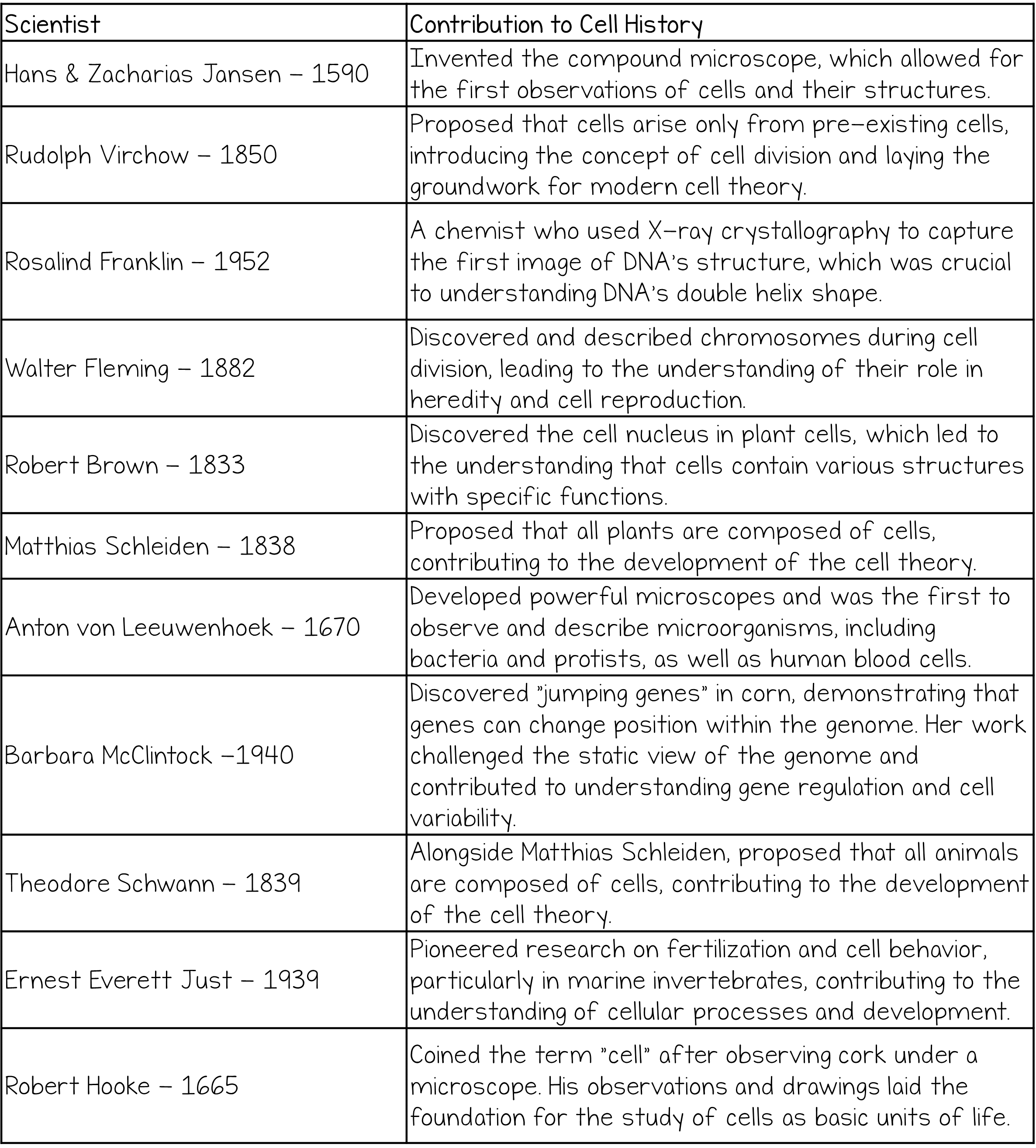
The invention of the microscope changed that. Microscopes allowed scientists to observe cells and discover that they contain many specialized parts, each with important functions. One common type, the compound microscope, uses two or more lenses to magnify objects and is often found in biology labs. In 1665, English scientist Robert Hooke used an early compound microscope to examine a thin slice of cork. He noticed tiny boxlike structures and called them “cells.”
As technology improved, microscopes became even more powerful. The electron microscope uses electron beams instead of light to produce highly magnified images. A transmission electron microscope, or TEM, allows scientists to see structures inside a cell. A scanning electron microscope, or SEM, produces detailed images of a cell’s surface and three-dimensional shape. Another tool, the scanning probe microscope, creates images by tracing a specimen’s surface with a tiny probe.
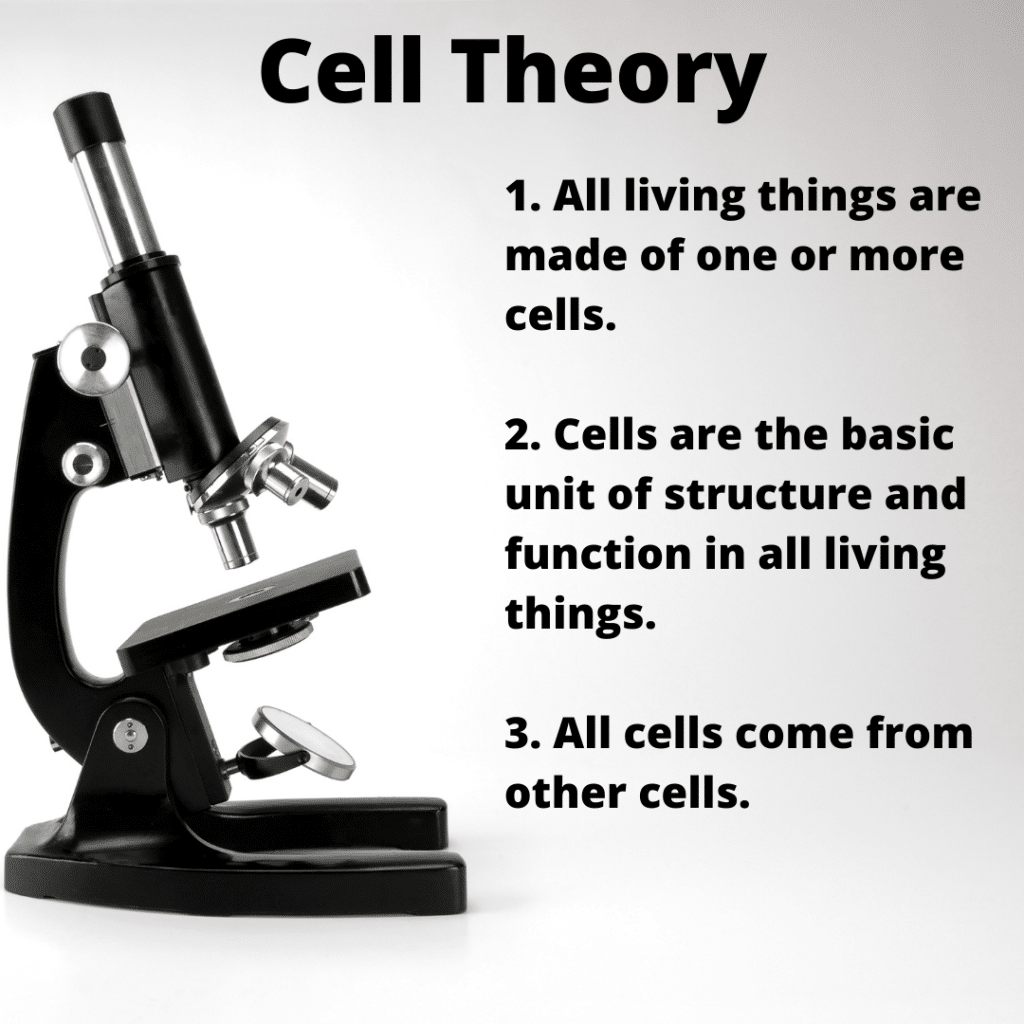
These advances helped scientists better understand how living things are organized and led to the development of one of biology’s most important ideas: cell theory. Cell theory states that all living things are made of one or more cells, cells are the basic units of structure and function in living things, and all cells come from preexisting cells.
Throughout the history of scientific exploration, many scientists have made important discoveries that have shaped our understanding of cells and how they function.
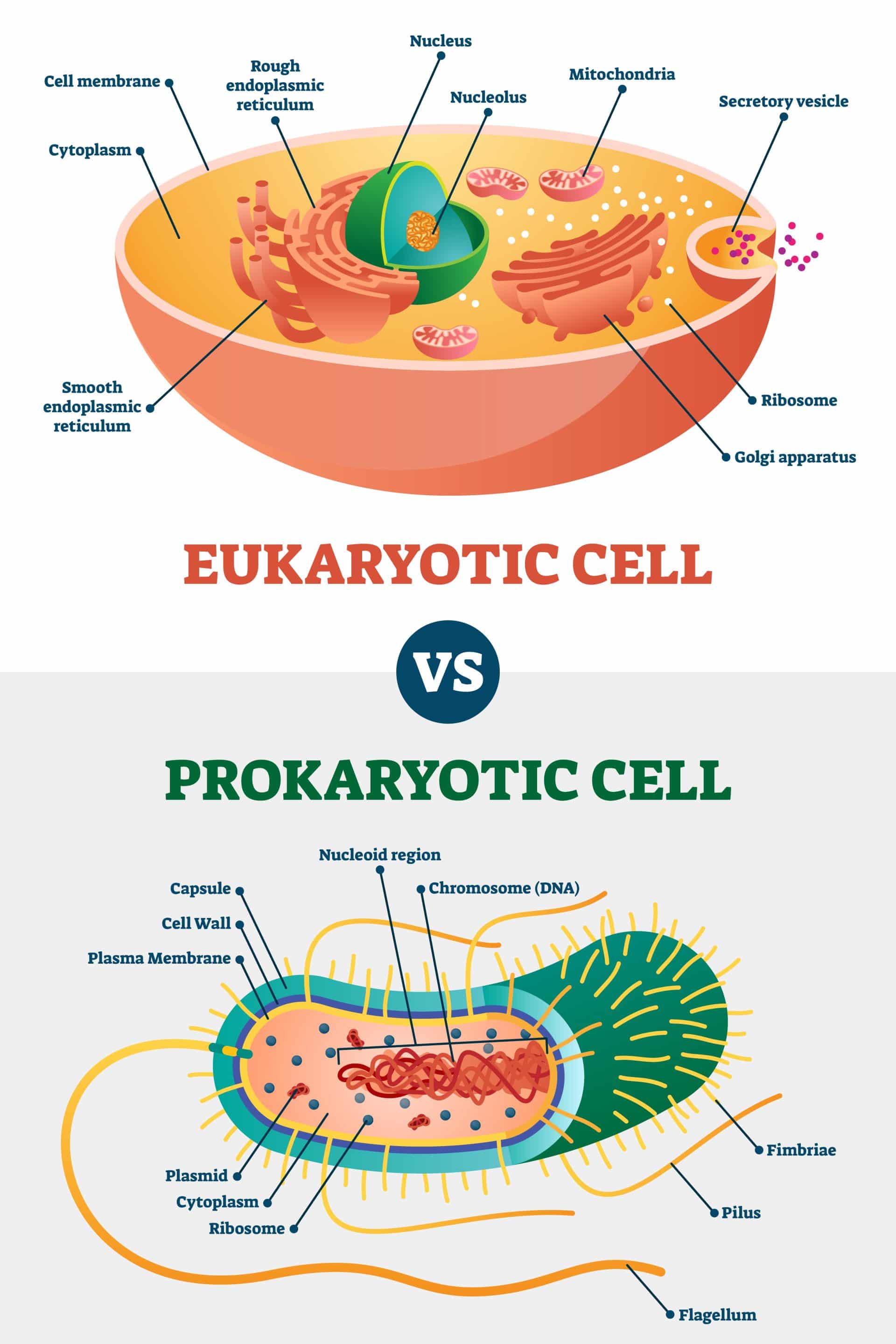
All cells contain small structures called organelles, each of which performs a specific function that helps the cell survive and operate. Cells are classified into two main types: prokaryotic cells and eukaryotic cells. Prokaryotic cells were the first to evolve and are generally smaller and simpler in structure. They do not have a true nucleus or membrane-bound organelles. Bacteria and archaea are examples of prokaryotic organisms. Eukaryotic cells are more complex. They have a nucleus enclosed by a membrane, as well as other membrane-bound organelles that carry out specialized tasks within the cell. Protists, fungi, plants, and animals are all made of eukaryotic cells.
Review:
- How did the invention of the microscope contribute to our understanding of cells?
- What is cell theory?
- Explain how prokaryotic and eukaryotic cells are different.