
Section 2: The Plasma Membrane
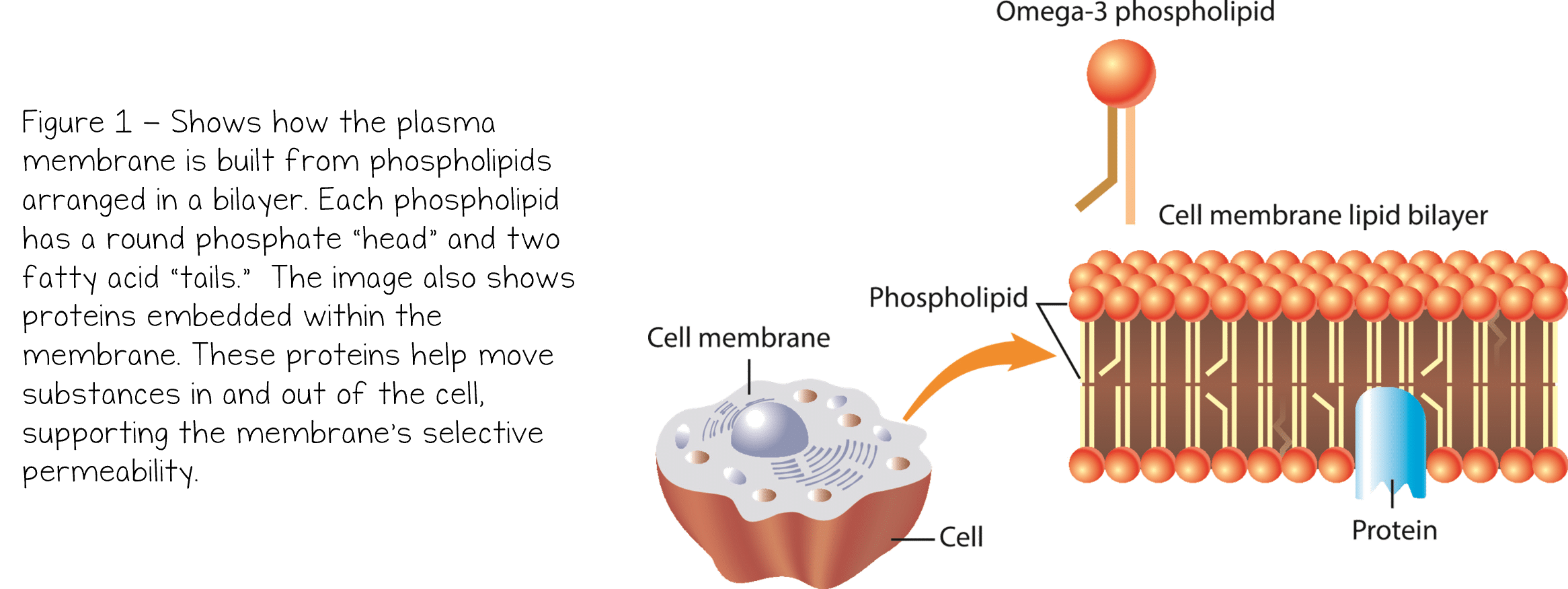 The plasma membrane, also called the cell membrane, is the thin, flexible boundary that surrounds a cell and separates it from its external environment. It helps protect the cell and plays an important role in controlling what enters and leaves. This ability to regulate the movement of materials is called selective permeability. Some substances can pass through the plasma membrane freely, some can cross only under certain conditions, and others cannot pass through at all. The plasma membrane is primarily made of phospholipids, which consist of a glycerol molecule, two fatty acids, and a phosphate group. These phospholipids are arranged in a phospholipid bilayer, a double layer that forms the foundation of the plasma membrane. This structure provides flexibility while also creating a barrier that separates the cell from its surrounding environment.
Scientists use the fluid-mosaic model to describe the structure of a plasma membrane. Fluid refers to how the membrane behaves—it is flexible and constantly moving. The phospholipids in the bilayer can shift and slide past one another, allowing the membrane to bend and change shape without breaking. Mosaic refers to the variety of different components embedded within the membrane, much like tiles in a mosaic.
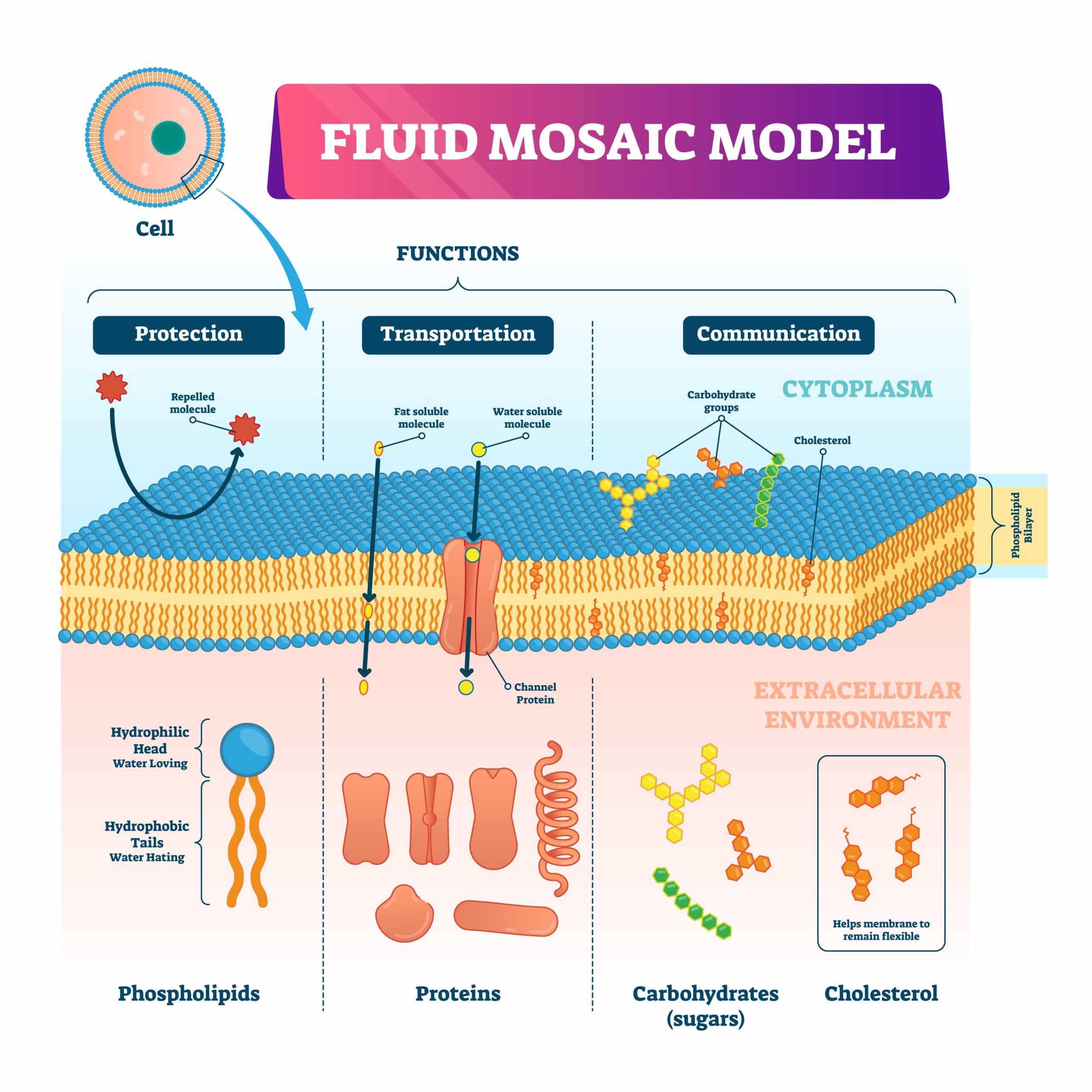
As shown in the image the above, these include:
- Phospholipids: Form the bilayer with hydrophilic heads facing outward and hydrophobic tails facing inward, creating a barrier.
- Proteins: Scattered throughout the membrane, they help transport substances (like channel proteins) and assist in cell communication.
- Carbohydrates (sugars): Attached to proteins or lipids, they act as identification markers and help cells recognize each other.
- Cholesterol: Helps maintain membrane flexibility and stability, especially in changing temperatures.
The image also highlights three major functions of the membrane:
- Protection: Acts as a barrier to keep harmful substances out.
- Transportation: Controls what enters and leaves the cell.
- Communication: Allows cells to send and receive signals through membrane proteins and carbohydrate chains.
Together, these features explain why the membrane is described as a fluid, ever-changing structure made of many different parts working together.
Review:
- What is selective permeability?
- What are phospholipids made up of?
- What is the fluid-mosaic model?