
Section 4: Mollusks, Arthropods, & Echinoderms
Mollusks are a diverse group of invertebrates found in both aquatic and terrestrial environments. Although they vary widely in appearance, all mollusks share several key features. They have soft bodies and may possess either an internal or an external shell. Examples include snails, clams, and squid. A thin layer of tissue called the mantle covers and protects their internal organs and, in many species, produces the shell. Many mollusks also have a muscular foot, which is adapted for movement, digging, or capturing prey.
Mollusks exchange gases using gills (in water) or lungs (on land), allowing them to take in oxygen and release carbon dioxide. Most mollusks have an open circulatory system, where blood is not always contained within vessels, making oxygen transport less efficient. This is why many mollusks have bluish blood due to the presence of copper-based molecules. Mollusks typically reproduce sexually, often releasing eggs and sperm into the water where fertilization occurs.
 There are three major groups of mollusks: gastropods, bivalves, and cephalopods, each with unique adaptations. Gastropods, such as snails and slugs, are the largest and most diverse group. They can live in oceans, freshwater, and even on land. Many gastropods have a single, coiled external shell that helps protect them and prevent water loss. They move using their muscular foot, gliding across surfaces, and rely on their senses of smell and sight to find food.
Bivalves include clams, oysters, and scallops. Their bodies are enclosed within two shells connected by a hinge and strong muscles. Bivalves are mostly sedentary and lack a distinct head. Instead, they filter food particles from the water using their gills, making them important for maintaining water quality in aquatic ecosystems.
Cephalopods, such as octopuses, squids, nautiluses, and cuttlefish, are the most advanced mollusks. They have well-developed brains, complex nervous systems, and large eyes. Unlike most mollusks, cephalopods have a closed circulatory system, allowing for more efficient oxygen transport and supporting their active lifestyles. They are fast swimmers and skilled predators. Octopuses, in particular, can change color and texture using specialized skin cells, allowing them to blend into their surroundings. When threatened, many cephalopods release a cloud of ink to confuse predators and escape.
Arthropods are the largest and most diverse group of invertebrates, with more than a million identified species and making up about 90% of all animal species on Earth. This group includes insects, spiders, and crustaceans, and they can be found in nearly every environment on the planet. Arthropods vary greatly in size, shape, behavior, and how they move, communicate, and obtain food.
Despite their diversity, all arthropods share several key characteristics. One defining feature is their exoskeleton, or external skeleton, which provides protection and support. Because an exoskeleton cannot grow with the animal, arthropods must periodically shed it in a process called molting. After molting, a new, larger exoskeleton forms, allowing the organism to continue growing. Another important characteristic is the segmented body, meaning many insects are divided into distinct sections, such as the head, thorax, and abdomen. Arthropods also have jointed appendages, specialized structures such as legs, antennae, and claws. These appendages allow them to move, capture food, sense their environment, and defend themselves.
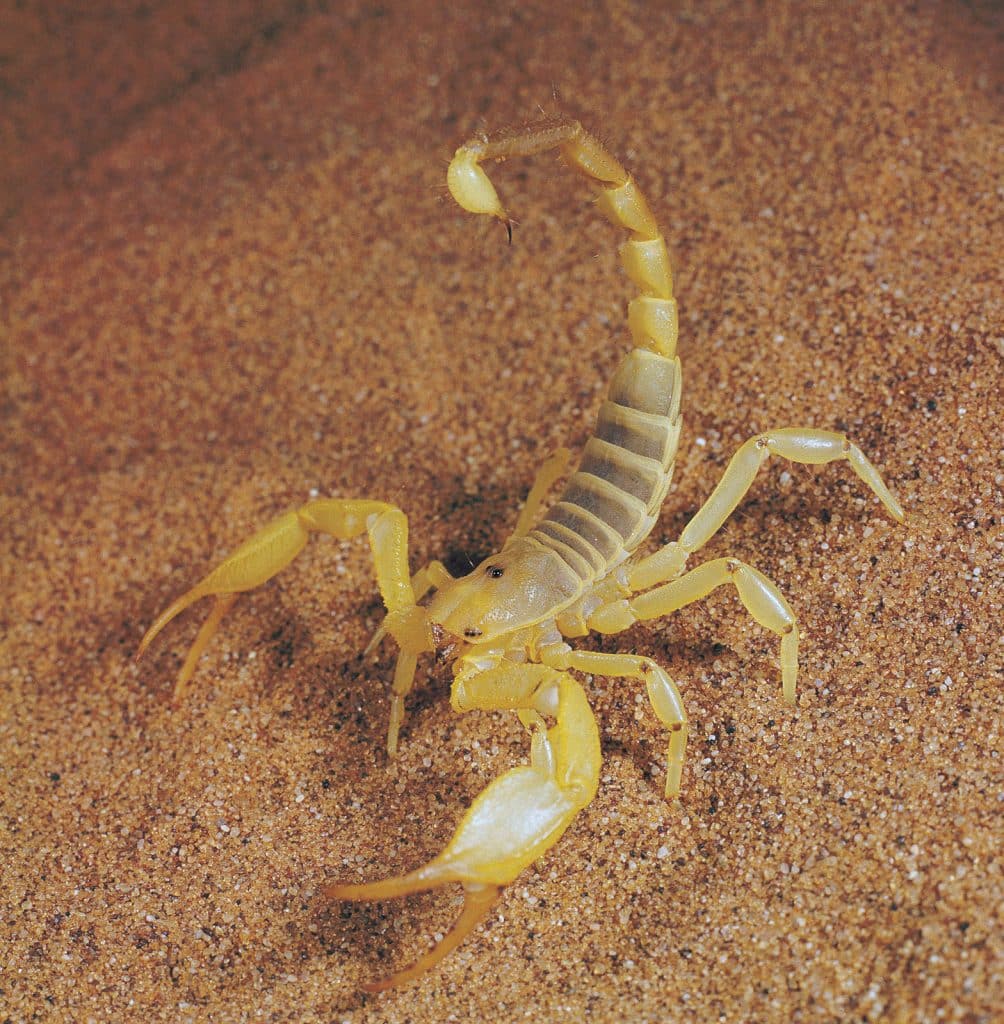 Within the arthropod group, chelicerates (commonly known as arachnids) include organisms such as spiders, scorpions, ticks, and mites. These animals share several distinct characteristics that set them apart from other arthropods. They have two main body sections—the cephalothorax and the abdomen—and four pairs of legs. Unlike insects, chelicerates do not have antennae, wings, or compound eyes. Instead of antennae, chelicerates possess specialized mouthparts called chelicerae, which are often adapted into fangs or pincers. These structures help them capture, crush, or inject substances into their prey. Spiders, for example, are skilled predators. Many use their chelicerae to inject venom into prey, which paralyzes or kills it. They may trap prey in webs or actively hunt, depending on the species. These adaptations make chelicerates highly effective hunters and an important part of many ecosystems.
Another important group of arthropods is the myriapods, which include centipedes and millipedes. These animals are terrestrial, meaning they live on land. Myriapods have two main body sections and long, segmented bodies with many legs—sometimes even hundreds. Centipedes are typically fast-moving predators with one pair of legs per segment, while millipedes are slower and often have two pairs of legs per segment and feed on decaying plant material. In contrast, hexapods include insects such as bees, ants, and butterflies. These arthropods have a more specialized body plan with three distinct sections: the head, thorax, and abdomen. They also have six legs (which is what “hexa” means) and often possess additional features like wings and antennae. This body structure allows for a wide variety of movement and behaviors, helping insects thrive in nearly every environment on Earth.

Crustaceans, which include lobsters, crabs, crayfish, and shrimp, live in aquatic environments, especially in the ocean, although some—like crayfish—are found in freshwater habitats. Crustaceans share several defining characteristics. They have segmented bodies, five or more pairs of legs, and two pairs of antennae, which they use to sense their surroundings. Like all arthropods, they possess an exoskeleton that provides protection and support. As crustaceans grow, they must undergo molting, shedding their old exoskeleton and forming a new, larger one. This process allows them to grow, but it also leaves them temporarily vulnerable until the new exoskeleton hardens.
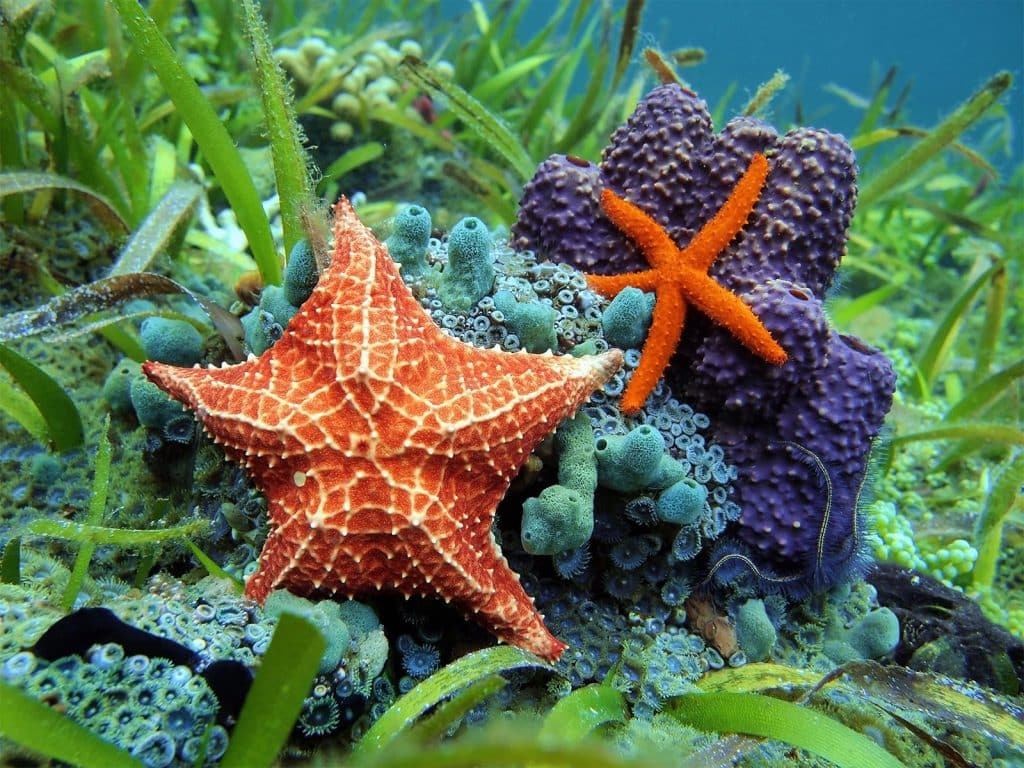
Echinoderms, meaning “spiny skin,” are a group of invertebrates that live exclusively in marine environments, from shallow shorelines to the deep ocean. This group includes sea stars, brittle stars, sea urchins, and sea cucumbers. Although they differ in appearance, all echinoderms share several important characteristics.
One key feature is their radial symmetry, meaning their body parts are arranged around a central point. Their bodies are supported by an endoskeleton, or internal skeleton, made of hardened plates. In many species, these plates form visible spines that help protect the animal and provide structure. Echinoderms are generally slow-moving, and some may even appear sessile. Another unique feature of echinoderms is their water vascular system, a network of fluid-filled tubes inside the body. This system plays a major role in movement, feeding, and gas exchange. For example, a sea star uses tiny tube feet connected to this system to move and grip surfaces, functioning like suction cups. Echinoderms have a variety of feeding strategies. Some, like sea stars, are carnivores that prey on other animals, while others, like certain sea cucumbers, are filter feeders or consume organic material from the ocean floor.
Review:
- Describe three characteristics of mollusks.
- Compare an endoskeleton to an exoskeleton.
- Describe three characteristics of chelicerates.