
Section 1: The Discovery of Cells

Cells are fascinating. They are the smallest and most fundamental unit of all living things and are the foundation of life itself. Cells can exist in simple forms, as found in bacteria, or complex structures, as seen in plants and animals. However, without the invention of the microscope, cells would have remained invisible throughout much of human history.
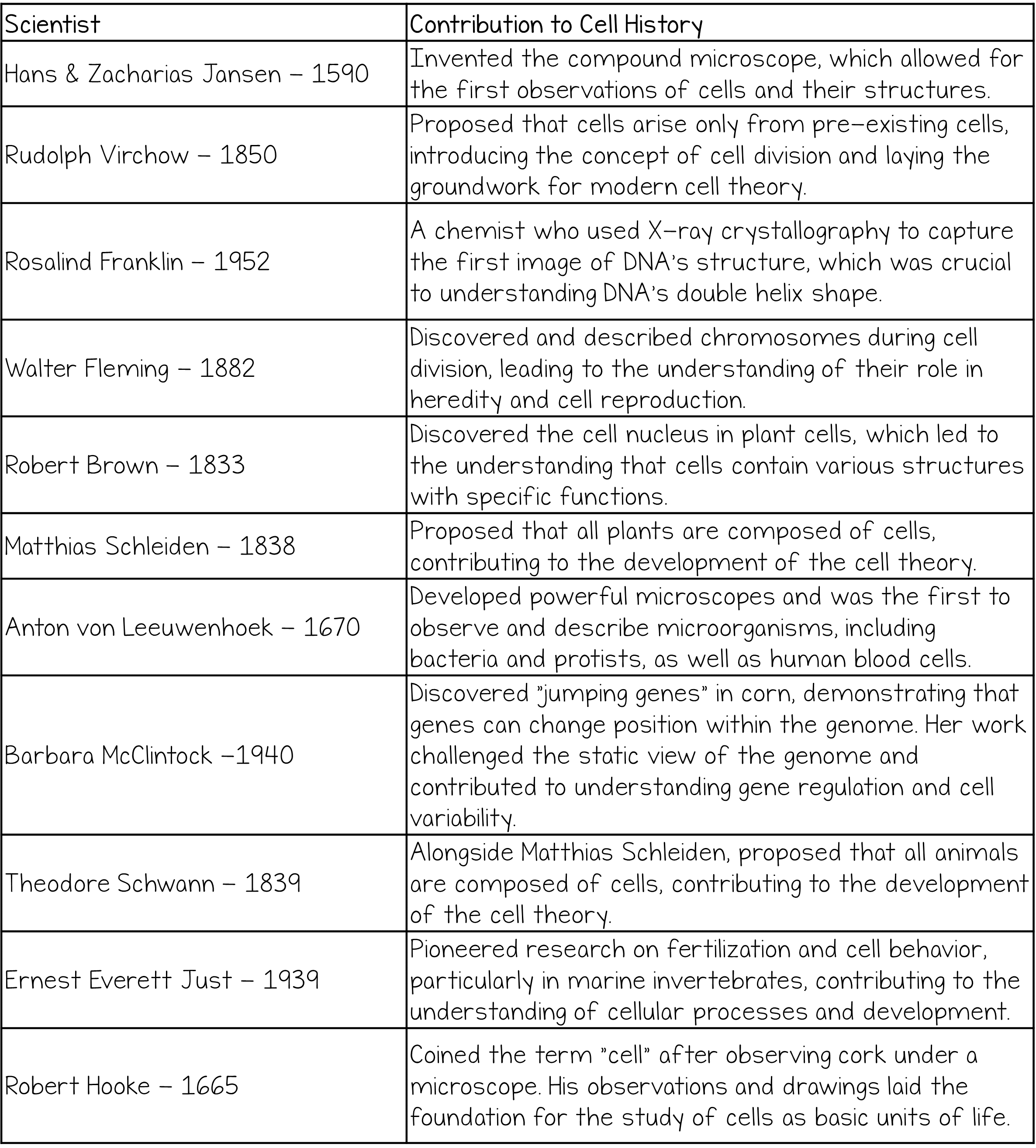
The development of microscopes allowed scientists to see that cells were composed of many parts with many functions. One type of microscope, the compound microscope, uses two or more lenses to magnify an object like those commonly found in a biology lab. In 1665, a scientist named Robert Hook used an early compound microscope to look at a cork slice and coined the term “cell” to describe the tissue. The development of an electron microscope, which uses electromagnetic fields, allows objects to be magnified up to 500,000 times using beams of electrons instead of light. The transmission electron microscope (TEM) lets scientists see cell structures. Additionally, the scanning electron microscope (SEM) enables scientists to see a cell’s three-dimensional shape, allowing them to study its surface. Further innovations include the scanning probe microscope, which generates images by tracing the surface of a cell or structure with a probe.
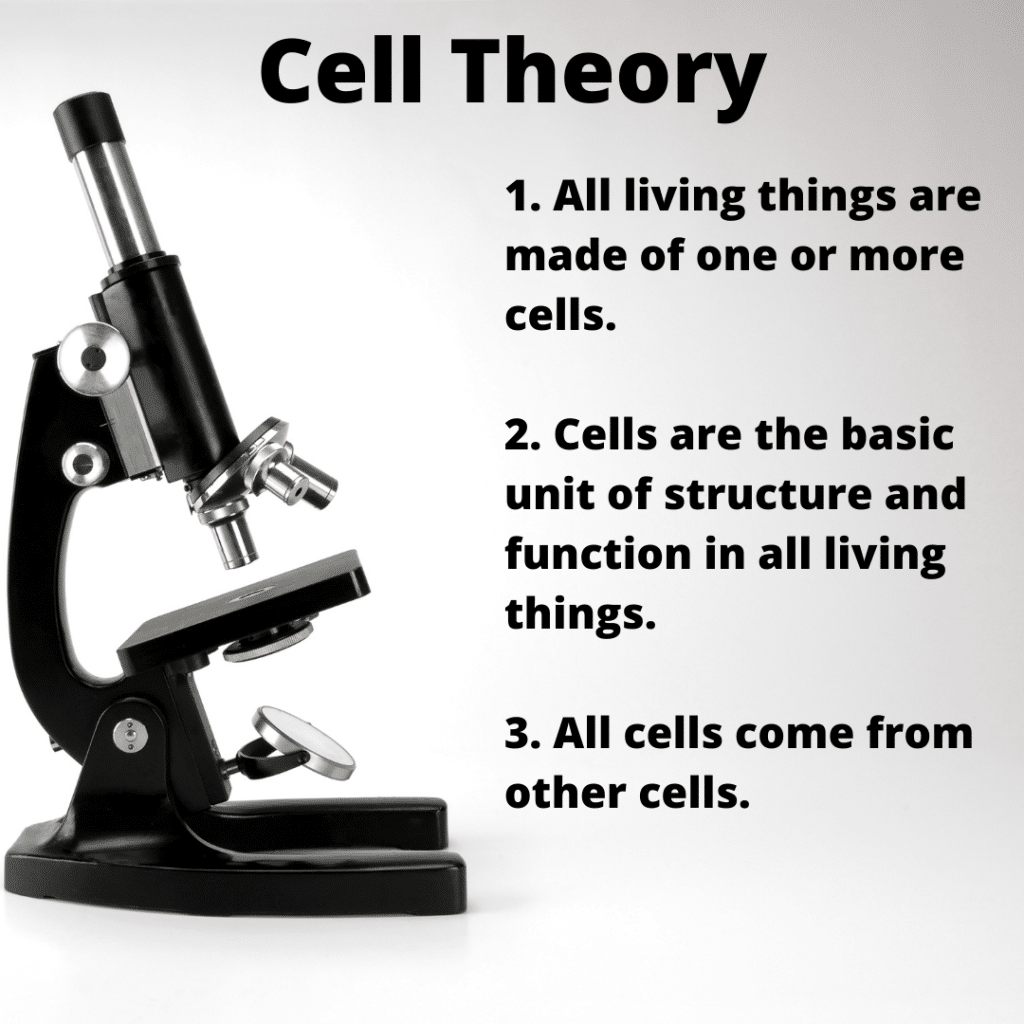
With the development of microscopes, scientists could observe and learn more about cells, creating a fundamental concept of biology. Cell theory was developed out of their conclusions. Cell theory has three main components. First, all living things are made of one or more cells. Secondly, cells are the basic unit of structure and function in all living things. Finally, all cells come from other cells.
Throughout the history of scientific exploration, a diverse array of researchers and thinkers have played pivotal roles in deepening our understanding of cells.
All cells contain small structures called organelles. Each organelle has a specific function in the cell. There are two distinct types of cells called prokaryotic and eukaryotic. Prokaryotic cells were the first to evolve. They lack a true nucleus and other membrane-bound organelles. They tend to be smaller and simpler. Bacteria and archaea are examples of prokaryotic cells. Eukaryotic cells are similar; all have a nucleus surrounded by a membrane and other membrane-bound organelles. Protists, fungi, plants, and animals are all eukaryotic cells.

Review:
- How did the invention of the microscope contribute to our understanding of cells?
- What is cell theory?
- Explain how prokaryotic and eukaryotic cells are different.