
Section 2: Reptiles & Birds

Reptiles are categorized into three main groups: lizards and snakes, alligators and crocodiles, and turtles. They live all over the world except in extremely cold regions. As ectothermic, or cold-blooded, animals, reptiles rely on external heat sources to regulate their body temperature. Because of this, they are most active in warm climates, where they can absorb energy from the sun to stay warm.
Unlike amphibians, reptiles are fully adapted to life on land. One of their most important adaptations is internal fertilization, where the egg and sperm join inside the female’s body. After fertilization, the developing embryo is protected by membranes and a leathery shell, forming an amniotic egg. This egg prevents the embryo from drying out and allows reptiles to reproduce without returning to water. Most reptiles lay their eggs on land and do not care for their young after laying them. However, crocodiles and alligators are exceptions, as they often guard their nests and protect their hatchlings.
Lizards are a diverse group of reptiles with a wide range of adaptations. Their bodies are covered with overlapping scales that help prevent water loss, allowing them to survive in dry environments. Unlike snakes, lizards shed their skin in patches rather than all at once. Many lizards also have the ability to regenerate their tails. When threatened by a predator, a lizard can detach its tail, which continues to move and distract the predator while the lizard escapes. Over time, the tail can grow back.
Snakes share several characteristics with lizards, including dry, scaly skin that helps reduce water loss. However, snakes have unique adaptations for movement and feeding. They move by pushing against surfaces with their muscles and scales, allowing them to glide forward or sideways. Their jaws are highly flexible and can stretch to swallow prey much larger than their heads. Snakes also shed, or molt, their skin several times as they grow. In addition, they have kidneys that help conserve water by filtering waste from the blood.
Turtles differ from other reptiles in one major way—their bodies are protected by a hard shell that develops from their ribs. When threatened, turtles can pull their heads and limbs into the shell for protection. Many turtles live in or near water and can hold their breath for long periods. Their diet may include plants, fish, or both. Like other reptiles, turtles lay eggs with leathery shells. During nesting season, many species travel from feeding areas to sandy beaches, where they dig holes, lay their eggs, cover them, and return to the water.
Crocodiles and alligators are powerful reptiles that have survived for millions of years. Although they spend much of their time in water, they can also move effectively on land. They have strong legs and muscular tails that help them swim. Their eyes and nostrils are located on top of their heads, allowing them to see and breathe while most of their bodies remain hidden underwater. Their powerful jaws and tough, scaly skin make them highly effective predators. One key difference between the two is the shape of their snouts: crocodiles have long, narrow, V-shaped snouts, while alligators have wider, U-shaped snouts.
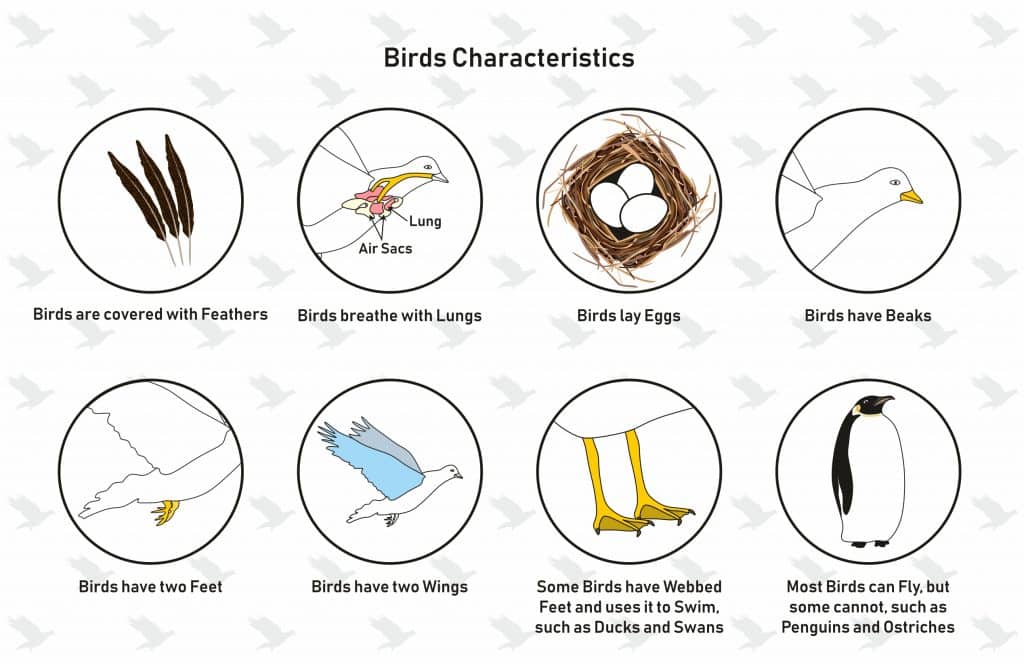
Unlike reptiles, birds are endothermic vertebrates, meaning they can regulate their internal body temperature. This allows them to live in a wide range of environments across the globe, from freezing polar regions to warm tropical climates. Birds have specialized body structures that help them survive in these different habitats. The shapes of their feet, legs, and beaks are closely related to how they live and what they eat. For example, a duck’s webbed feet are adapted for swimming, while an ostrich’s long, powerful legs allow it to run quickly across open land. Gulls use their sharp beaks to catch prey, toss it into the air, and swallow it whole. A bird’s beak is made of keratin, the same material found in human fingernails, making it strong, lightweight, and well-suited for tasks like pecking, tearing, or cracking food.
Because many birds spend much of their lives flying, they require a large amount of energy. To meet this demand, birds have highly efficient body systems. Their respiratory system allows oxygen to move quickly through the body, supplying muscles with the energy needed for flight. In addition, birds have a four-chambered heart that pumps oxygen-rich blood efficiently, supporting their high activity levels. To fuel this energy use, birds eat high-energy foods such as insects, seeds, and small animals.
Birds are also physically adapted for flight. Their wings have a specific shape and large surface area that generate lift. Their bones are hollow, making their bodies lightweight without sacrificing strength. Strong flight muscles attached to the breastbone provide the power needed for both short bursts of movement and long-distance travel.
A bird’s feathers are another key adaptation. Feathers serve multiple functions, including flight, insulation, and protection. Flight feathers, found on the wings and tail, help birds steer and stay airborne. Contour feathers give birds a smooth, streamlined shape that reduces air resistance, making flight more efficient. Down feathers, located beneath the outer feathers, trap heat and help birds maintain a constant body temperature.

The amniotic egg, a defining feature of reptiles and birds, comprises distinct components that are crucial for protecting and nourishing a developing embryo. The amnion surrounds the embryo in a fluid-filled sac, providing cushioning and a watery environment. The albumen, or egg white, protects the embryo and supplies water and protein. The chorion helps with gas exchange, allowing oxygen to reach the embryo. The allantois stores waste and also assists in respiration as it develops. The yolk is rich in fat, which serves as an energy source for the developing embryo. Finally, the shell protects the egg while still allowing gases and water vapor to pass through.
Review:
- Identify three characteristics of reptiles.
- What is the function of the kidney?
- What adaptations do birds have that allow them to live in such diverse areas?