
Section 2: Acids, Bases, and Salts

The pH scale Universal Indicator pH Color Chart diagram
Both acids and bases are commonly found in everyday life. You have probably heard the term “acidic” used to describe fruits such as lemons and oranges. An acid is a substance that produces hydrogen ions (H+) in a solution. The ability to produce these ions gives acids their distinct properties. Acids taste sour and are electrolytes, meaning they can conduct electricity when dissolved in water. Many acids are also corrosive, meaning they can dissolve certain metals. In addition, acids react with indicators to produce predictable color changes. An indicator is a compound that changes color to help determine whether a substance is an acid or a base. For example, litmus paper turns red in an acidic solution and blue in a basic solution.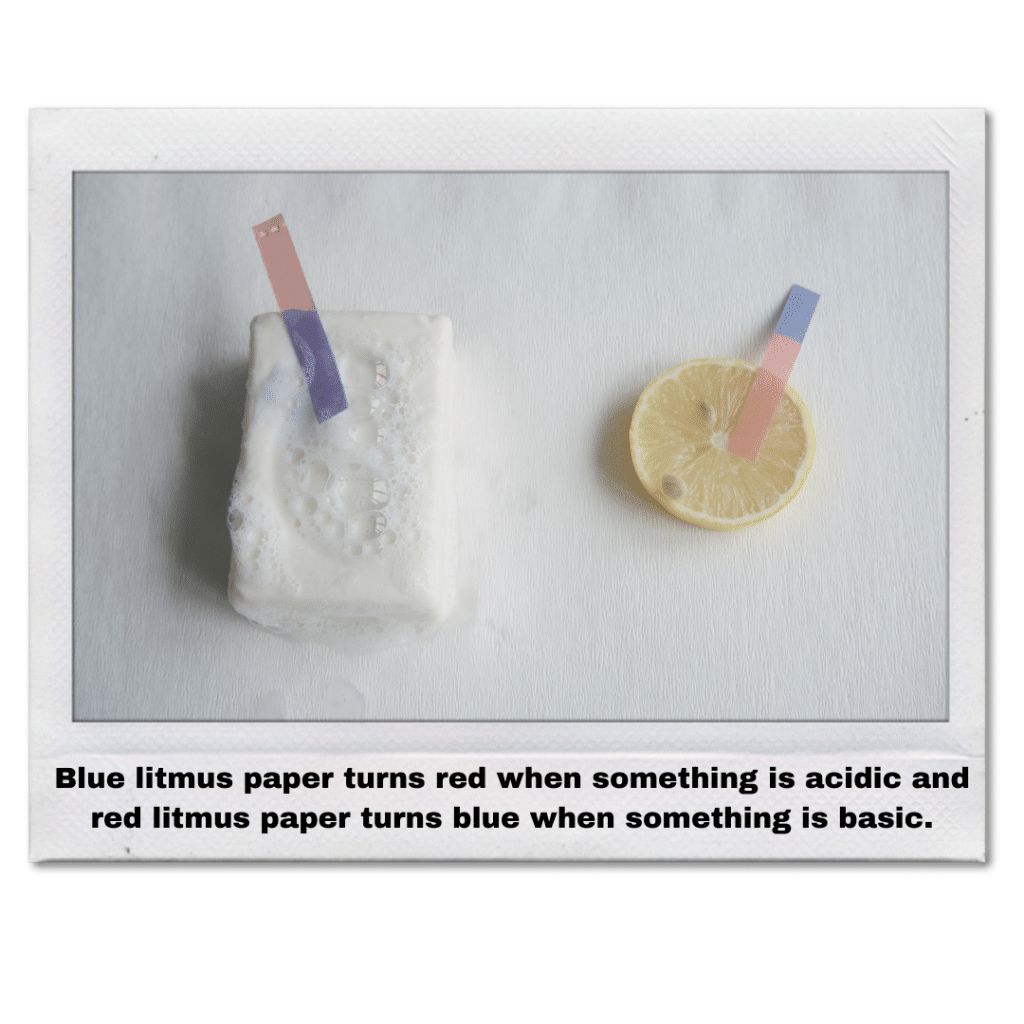 Like acids, bases can also be found in many household products, including hand soaps and cleaning supplies. A base is a substance that produces hydroxide ions (OH-) in a solution and can also accept H+ ions from acids. Bases share several common characteristics. In their undissolved state, many bases are crystalline solids. When dissolved in water, bases often feel slippery and usually taste bitter. Strong bases can also be corrosive and may damage skin if handled improperly.
When acids and bases are combined, a process called neutralization occurs. Neutralization is a chemical reaction between an acid and a base in a water solution that produces water and a salt. A salt is a compound formed when the negative ions from an acid combine with the positive ions from a base. This reaction can be summarized as:
acid + base → salt + water
Neutralization reactions are important in many everyday situations, such as reducing stomach acid with antacids or balancing soil pH for farming.
Review:
- Identify three characteristics of acids.
- Identify three characteristics of bases.
- What is neutralization?