
Section 3: The Cardiovascular System
The cardiovascular system, also called the circulatory system, transports materials throughout the body. It delivers oxygen, nutrients, and other needed substances to cells while carrying away waste products such as carbon dioxide. The cardiovascular system is made up of the heart, blood vessels, and blood, all of which work together to maintain the body’s internal balance.
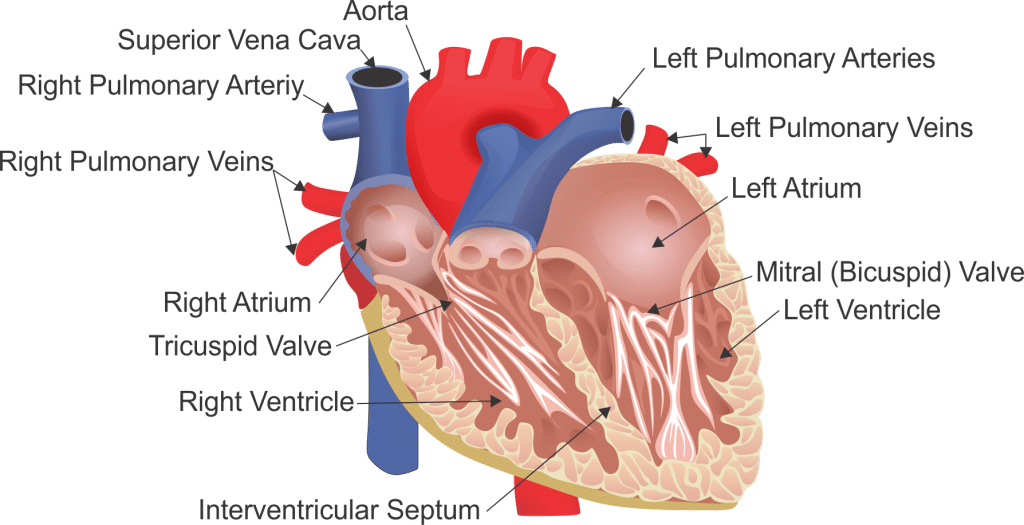 The heart is a hollow, muscular organ that pumps blood throughout the body. Each heartbeat pushes blood through a network of blood vessels. The heart contains four chambers. The two upper chambers are called atria, and the two lower chambers are called ventricles. Blood first enters the atria and then moves into the ventricles, which pump blood out of the heart.
A thick wall called the septum separates the right side of the heart from the left side, preventing oxygen-rich and oxygen-poor blood from mixing. Between the chambers are valves that keep blood flowing in one direction by preventing it from moving backward. The familiar “lub dub” sound of the heartbeat is caused by these valves opening and closing.
The heart must beat in a coordinated pattern to pump blood effectively. A small group of specialized cells in the right atrium, called the pacemaker, sends electrical signals that control the timing of heart contractions and maintain a steady heartbeat. Heart rate is the number of times the heart beats in one minute and is an important indicator of cardiovascular health. A person’s pulse can be felt where arteries pass close to the skin, such as on the underside of the wrist. Measuring heart rate during rest and physical activity can provide information about how efficiently the heart is working.
Blood travels throughout the body in blood vessels. There are three main types of blood vessels: arteries, capillaries, and veins. Arteries carry blood away from the heart to the body’s organs and tissues. Their thick, muscular walls help withstand the high pressure created by the pumping heart. Most arteries carry oxygen-rich blood. Capillaries are microscopic blood vessels that connect arteries and veins. Their walls are only one cell thick, allowing oxygen, nutrients, carbon dioxide, and other substances to diffuse between the blood and body tissues. Veins carry blood back to the heart. They have thinner, more flexible walls than arteries do, and blood flows through them at lower pressure. Many veins contain valves that help prevent blood from flowing backward as it returns to the heart.
Blood pressure is the force of blood pushing against the walls of blood vessels. This pressure is generated by the heart’s pumping action and is necessary to keep blood moving throughout the body.
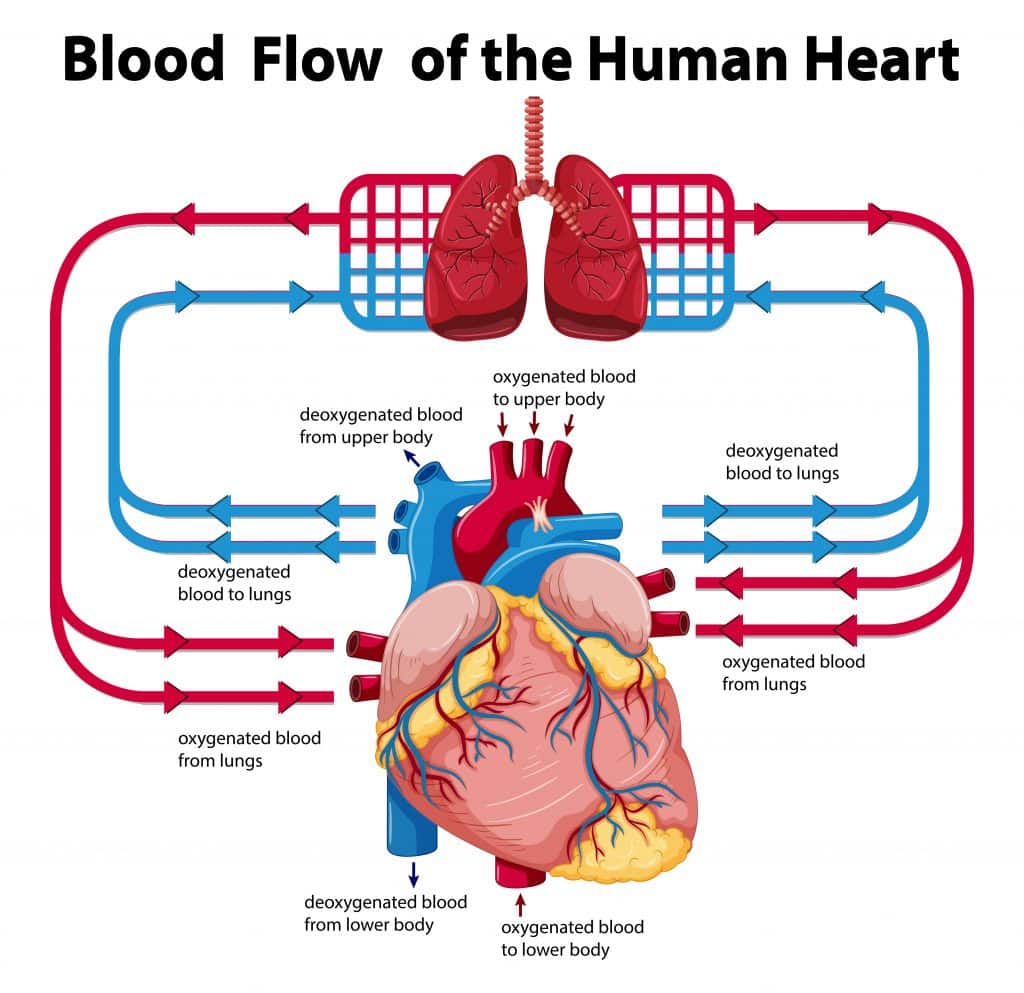
Blood circulates through the body in two main loops. In the pulmonary loop, blood travels from the heart to the lungs, where carbon dioxide is removed, and oxygen is absorbed. The oxygen-rich blood then returns to the heart. In the systemic loop, blood is pumped from the heart to the rest of the body, delivering oxygen and nutrients to cells before returning to the heart again.
Review:
- What is the purpose of the cardiovascular system?
- What is the difference between arteries and veins?
- Compare the two loops of blood flow.