
Section 1: The Respiratory System

The respiratory system is responsible for supplying the body with oxygen and removing carbon dioxide and water vapor. Oxygen is needed by cells to release energy from food, while carbon dioxide is a waste product that must be removed to maintain balance in the body. The respiratory system includes the nose, pharynx, larynx, trachea, bronchi, and lungs, all of which work together to move air into and out of the body.
Breathing is the physical movement of air into and out of the lungs. Taking air into the body is called inhalation, while pushing air out is called exhalation. A large muscle called the diaphragm plays a major role in this process. The diaphragm is located beneath the lungs at the bottom of the rib cage. When the diaphragm contracts, it flattens and increases the space inside the chest cavity, allowing air to enter the lungs. When it relaxes, the chest cavity becomes smaller, forcing air out of the lungs. Respiration is different from breathing. Respiration is the chemical process cells use to release energy from glucose using oxygen. During this process, cells produce carbon dioxide and water as waste products, which are carried back to the lungs and exhaled.
Air enters the body through the nose and nasal cavity. The nasal cavity is lined with mucus and tiny hair-like structures called cilia. Cilia sweep dust, dirt, and other particles trapped in mucus away from the lungs, helping clean and protect the respiratory system. The air is also warmed and moistened as it passes through the nasal cavity. From the nasal cavity, air moves into the pharynx, or throat. The pharynx is a passageway shared by both the respiratory and digestive systems because it carries both air and food. Near the pharynx is the larynx, often called the voice box. The larynx contains vocal cords that produce sound when air from the lungs passes over them.
Air then enters the trachea, also known as the windpipe. The trachea is supported by cartilage rings that keep it open and prevent it from collapsing. Like the nasal cavity, the trachea is lined with mucus and cilia that help trap and remove particles. A small flap of tissue called the epiglottis folds over the opening of the trachea when swallowing, preventing food or liquids from entering the lungs.
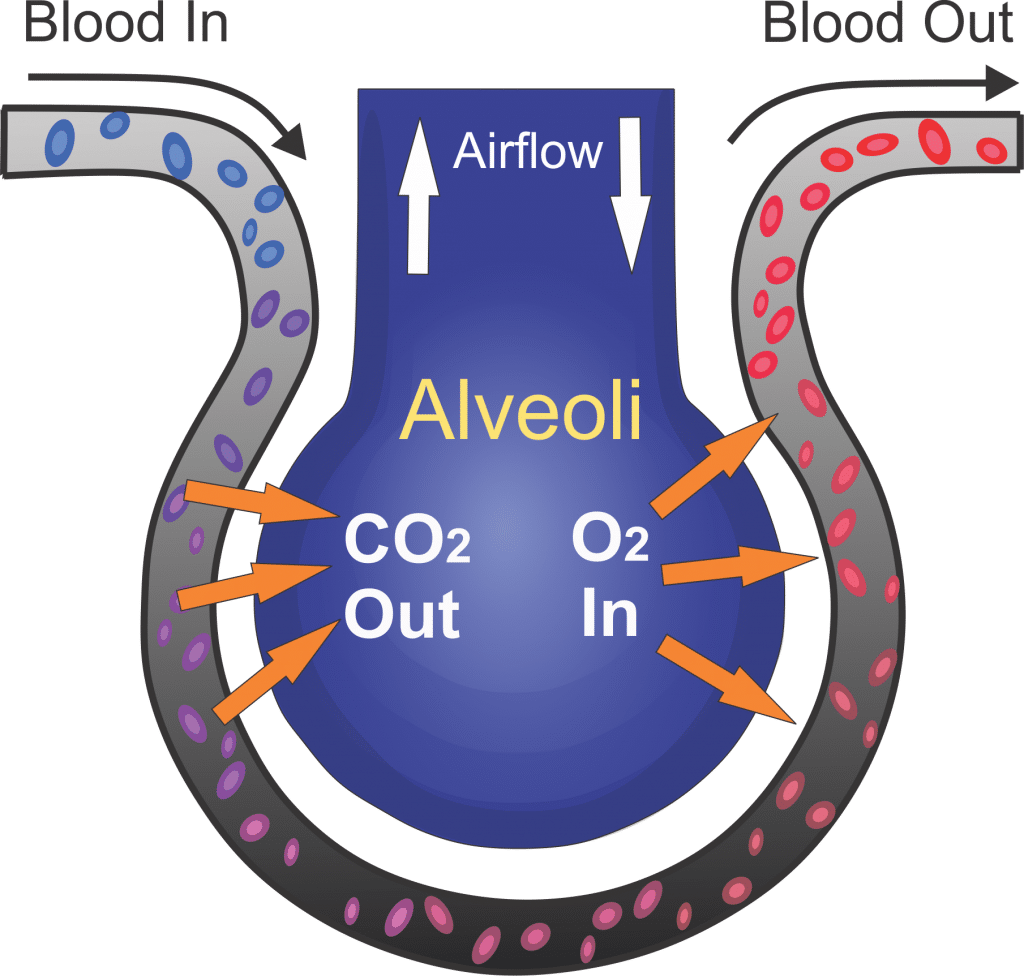
At the lower end of the trachea, air passes into two large tubes called bronchi, which lead into the lungs. Inside the lungs, the bronchi branch into smaller tubes called bronchioles. These tiny passageways end in clusters of microscopic air sacs called alveoli. The alveoli are specialized structures where gas exchange occurs. Oxygen moves from the air in the alveoli into the bloodstream, while carbon dioxide moves from the blood into the alveoli to be exhaled from the body.

Review:
- What is the function of the diaphragm?
- Explain the function of the epiglottis.
- What is the purpose of the respiratory system?