
Section 5: The Endocrine & Reproductive Systems
The endocrine system is responsible for producing chemical messengers called hormones. Hormones help regulate many of the body’s daily activities and control long-term processes such as growth, metabolism, development, and reproduction. Endocrine glands release hormones directly into the bloodstream, allowing them to travel throughout the body. Hormones only affect specific target cells that recognize their chemical structure.
Major endocrine glands include the hypothalamus, pituitary gland, thyroid gland, parathyroid glands, adrenal glands, thymus, and pancreas. The ovaries in females and the testes in males are also part of the endocrine system because they produce important reproductive hormones. The hypothalamus and pituitary gland work together to help control many other endocrine glands, earning the pituitary gland the nickname “master gland.”
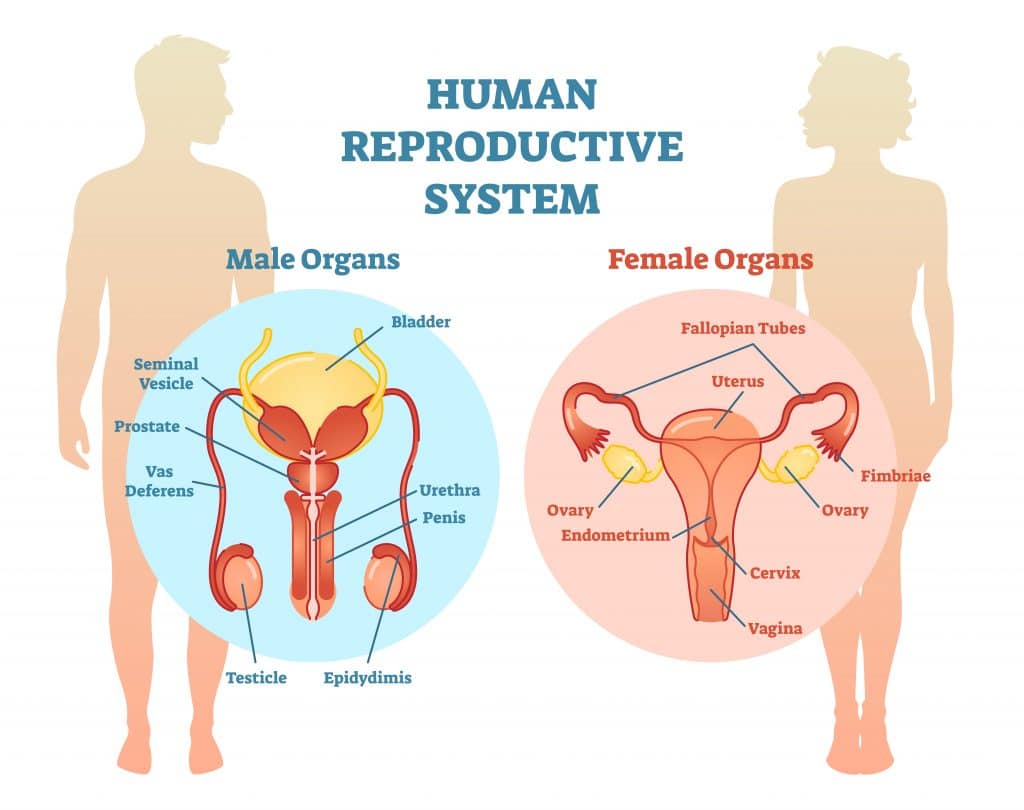
The reproductive system works closely with the endocrine system because hormones regulate reproductive development and functions. Of all the body systems, the male and female reproductive systems differ the most. Their main purpose is to produce reproductive cells and allow the continuation of life through reproduction. The male reproductive system has two primary functions: producing sperm cells and releasing the hormone testosterone. The main organs of the male reproductive system are the testes and the penis. The testes are located in the scrotum and produce sperm through meiosis. They also produce testosterone, the primary male sex hormone, which is responsible for the development of male reproductive organs and secondary sex characteristics such as a deeper voice and increased muscle growth. Sperm mix with fluids to form semen, which leaves the body through the penis.
The female reproductive system produces eggs and releases hormones such as estrogen and progesterone. The main reproductive organs are the ovaries, which are located in the abdomen. Each ovary contains immature egg cells and is connected to a fallopian tube. During ovulation, a mature egg is released from an ovary into a fallopian tube. If fertilization occurs, the fertilized egg may implant in the uterus, a muscular organ that protects and nourishes a developing fetus. If fertilization does not occur, the unfertilized egg and the lining of the uterus are shed during menstruation. The menstrual cycle is a monthly cycle of hormonal and physical changes in the female reproductive system. Menstruation is often one of the first signs of female reproductive maturity. During this process, the lining of the uterus breaks down and leaves the body through the cervix and vagina if pregnancy has not occurred.
Fetal development occurs over approximately 40 weeks and is divided into three trimesters. During the first trimester, weeks 1–12, the embryo undergoes rapid development as major organ systems begin to form, including the heart, brain, and spinal cord. By the end of this stage, many body structures are recognizable. The second trimester, weeks 13–28, is marked by rapid growth and increased development of body systems. Bones strengthen, skin forms, and the fetus begins responding to sounds and movement. During this stage, the eyes begin to open, and the fetus may suck its thumb. In females, all the egg cells the individual will have during life are already forming in the ovaries. During the third trimester, weeks 29–40, the fetus continues to grow and gain weight while organs mature in preparation for life outside the uterus. The lungs and nervous system continue developing, and the fetus usually moves into a head-down position before birth.
Review:
- What are hormones?
- What are the two main functions of the female reproductive system?
- How often does the menstrual cycle occur?