
Section 4: The Nervous System
The nervous system is the body’s communication and control network. It collects information from inside and outside the body, processes that information, and coordinates responses. The two main organs of the nervous system, the brain and spinal cord, work together to help the body sense changes, make decisions, and react quickly. Signals travel throughout the body as electrical impulses carried by specialized cells called neurons.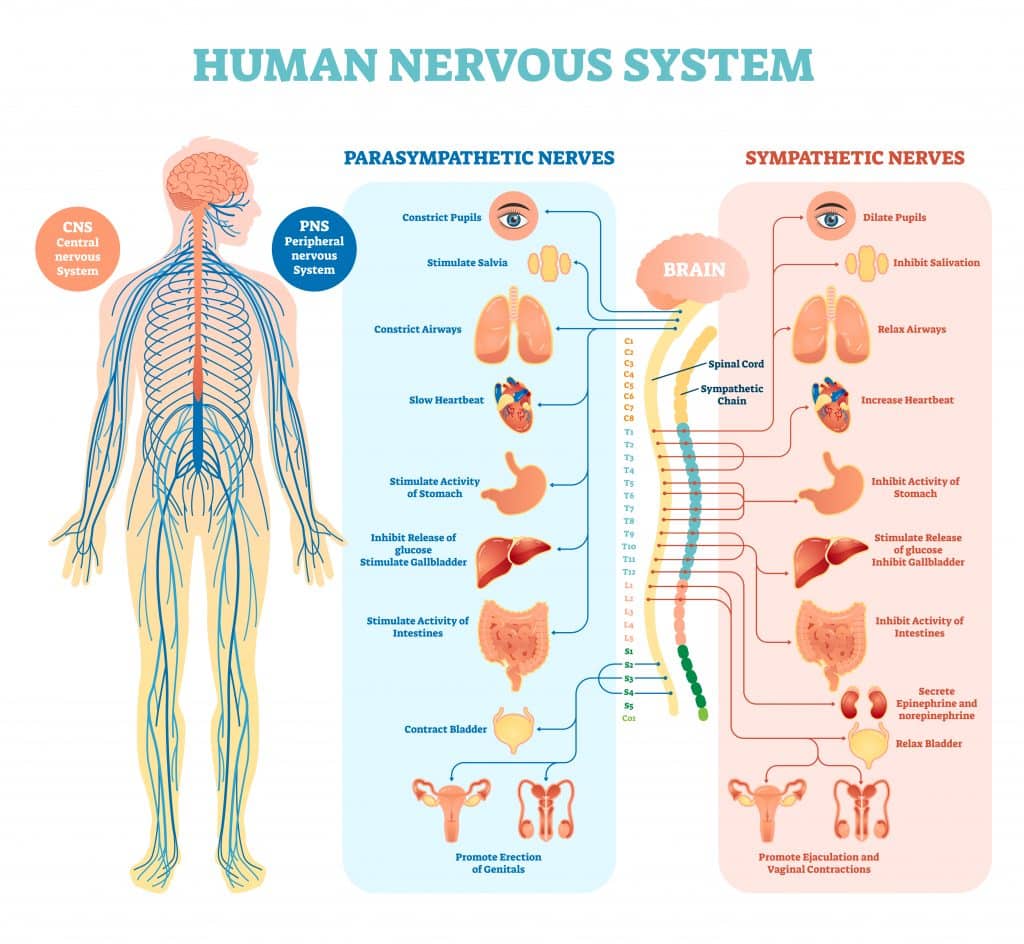
The nervous system is divided into two major parts: the central nervous system and the peripheral nervous system. The central nervous system consists of the brain and spinal cord and acts as the body’s control center. The brain processes information and directs the body’s responses, while the spinal cord serves as the main pathway for messages traveling between the brain and the rest of the body. The peripheral nervous system includes the nerves that branch throughout the body. These nerves carry messages between the central nervous system and muscles, organs, and sense receptors.
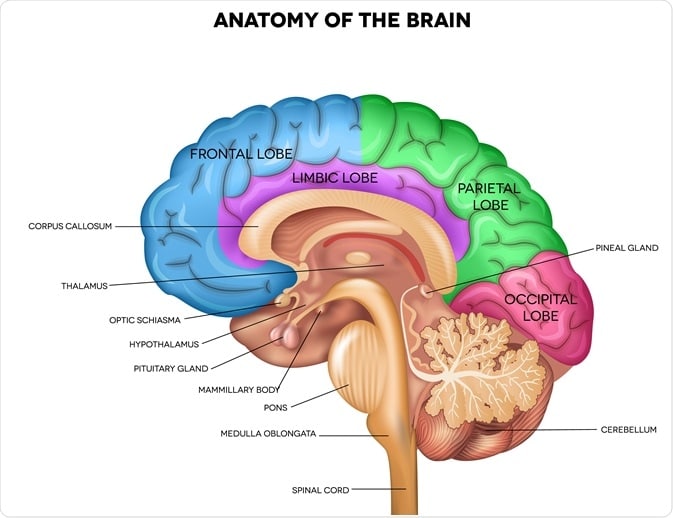
The brain is the main control center of the nervous system and is protected by the skull. It is made up of several major regions that perform specialized functions. The largest region is the cerebrum, which sits above the brain stem. The cerebrum controls movement, the senses, speech, memory, learning, emotions, and complex thought. It is divided into two hemispheres, the right and left, which communicate with one another while specializing in different tasks.
The right hemisphere is often associated with creativity, imagination, music, and recognizing patterns or the “big picture.” The left hemisphere is more involved with logical thinking, language, reading, writing, and solving problems step by step. Although each hemisphere has specialized functions, both sides work together constantly to process information and coordinate actions.
The outer layer of the cerebrum is called the cerebral cortex. This folded layer contains billions of neurons and is responsible for processing information from the sense organs, controlling voluntary movements, and carrying out higher-level thinking skills such as reasoning and decision-making.
The cerebellum is the second-largest region of the brain and is located beneath the cerebrum and next to the brain stem. It coordinates muscle activity, balance, posture, and fine motor skills. The cerebellum helps the body perform smooth and controlled movements, such as catching a ball, typing, or riding a bicycle. It also plays an important role in hand-eye coordination and helps the body maintain balance while moving.
The brain stem is the smallest of the three major brain regions and is located below the cerebrum, connecting the brain to the spinal cord. It acts as a pathway for messages traveling between the brain and the rest of the body. The brain stem also controls many involuntary functions that are necessary for survival, including breathing, heart rate, blood pressure, and digestion. Because these functions occur automatically, the brain stem works continuously without conscious effort.
The nerves located outside the brain and spinal cord make up the peripheral nervous system. This system consists of a network of nerves that branch throughout the body, connecting the central nervous system to muscles, organs, and sense receptors. The peripheral nervous system has two major divisions: the sensory division and the motor division.
The sensory division carries impulses from sense receptors to the central nervous system. These impulses provide the brain with information about the environment, such as sights, sounds, smells, tastes, temperature, and touch. The motor division carries impulses from the central nervous system to muscles and glands, allowing the body to respond by moving or releasing substances such as hormones or sweat. Some responses occur automatically through reflexes. A reflex is a rapid, involuntary response to a stimulus that helps protect the body from harm. For example, quickly pulling your hand away from a hot object is a reflex controlled by the spinal cord before the brain fully processes the pain. Hearing depends on detecting sound waves produced by vibrations. Structures in the ear collect these vibrations and convert them into nerve impulses that the brain interprets as sound. Taste and smell are closely connected because both rely on sensory receptors that detect chemicals. Taste receptors located on the tongue respond to chemicals in food, while sensory neurons in the nose detect airborne chemicals that produce odors. Together, these senses help identify flavors and smells. Touch allows the body to detect pressure, pain, temperature, and texture. Sensory receptors in the skin detect these stimuli and send impulses to the brain or spinal cord, allowing the body to respond quickly to changes in the environment.
Review:
- What is the function of the central nervous system?
- Describe characteristics of the cerebellum.
- Can you identify the five senses?