
Section 1: Nature of Energy

Energy is everywhere, driving all changes, big and small. It exists in various forms, such as light, chemical, thermal, radiant, electrical, and nuclear energy. The sun is our primary energy source, providing light energy that plants utilize to produce chemical energy for themselves and other organisms. This chemical energy fuels our bodies, enabling movement and growth. Energy is vital in sustaining life and driving processes across the universe.
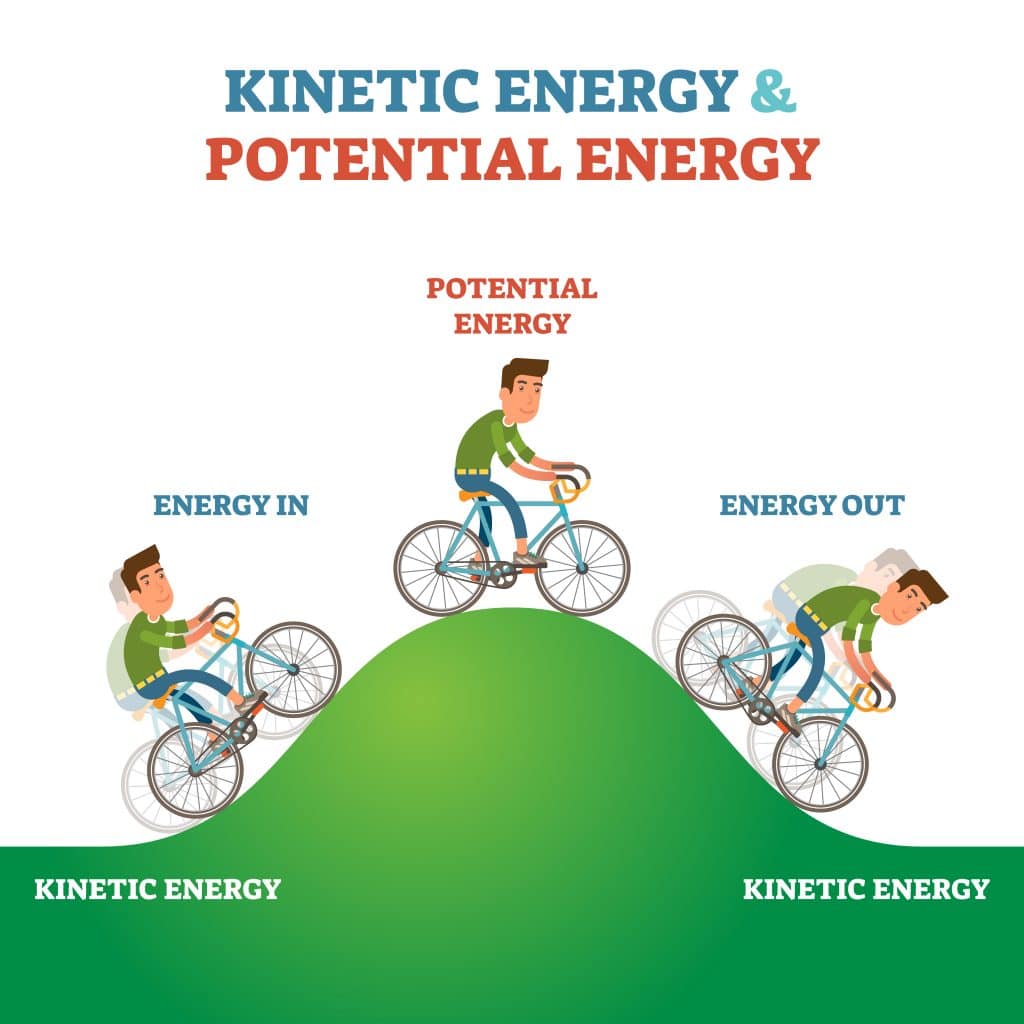
Energy is often thought of as either energy that is moving or energy that is stored. Kinetic energy is the energy something has when it is in motion. The kinetic energy measure depends on a moving object’s mass and velocity. Potential energy is energy that is stored, and it depends on an object’s position rather than its motion. It means that the stored energy in an object has the potential to work or that the stored energy can be released. Energy does not have to involve motion; even motionless objects can have stored or potential energy, meaning the object has the potential to cause change.

Energy can be stored in other ways as well. For example, elastic potential energy can be stored in something that can be stretched or compressed, like a rubber band or a spring. For example, a trampoline uses elastic potential energy. The base of it that you jump on acts as a rubber band that bounces you upward.

Gravity is the pull of one object on another. Gravitational potential energy is stored in an object due to its position and height. The higher an object is in the air and the heavier it is, the more gravitational potential energy it has. The gravitational potential energy is greatest at the highest point on a roller coaster.

Chemical potential energy is energy that is stored in chemical bonds. It’s found in plants, batteries, food, coal, propane, and oil.
.
Review:
- List four types of energy.
- Compare potential energy to kinetic energy.
- Explain elastic potential energy.