
Section 3: Electrical Circuits
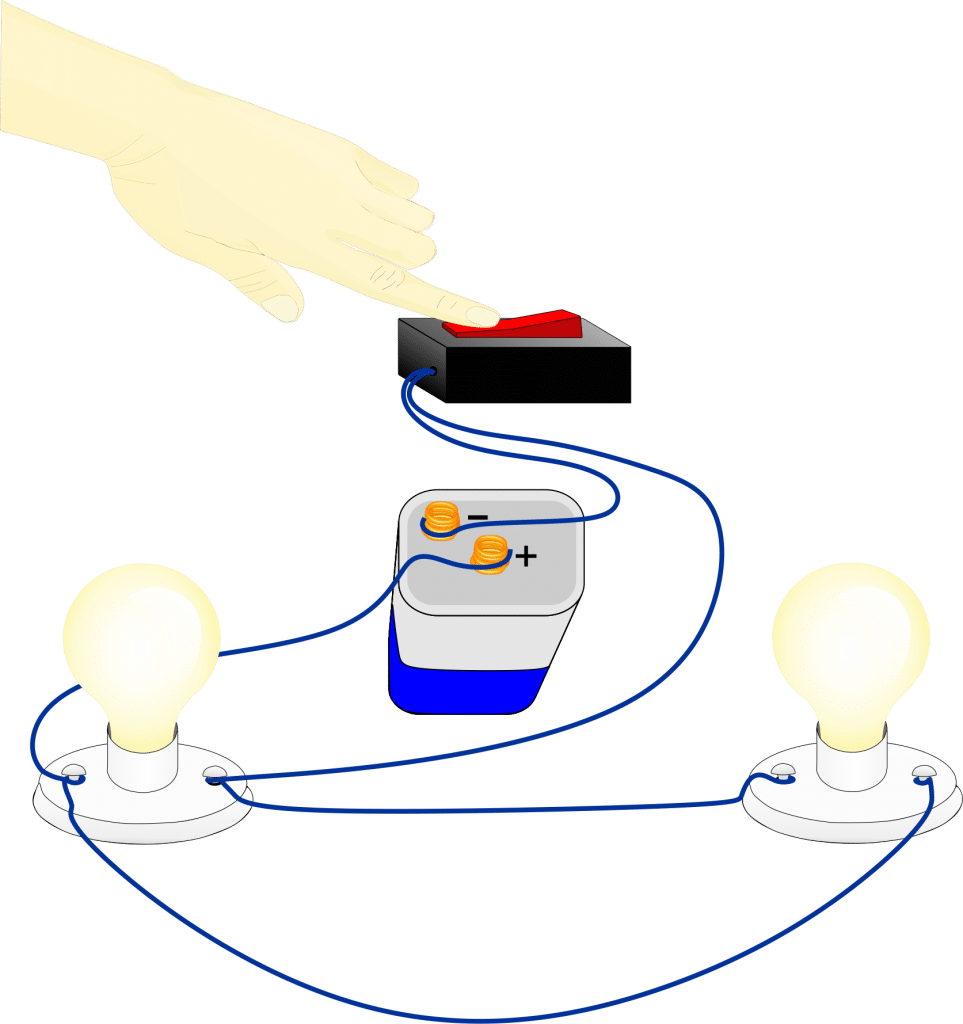
Parallel circuit

Series circuit
An electrical circuit is a pathway that allows electrons to flow. For an electric current to move through a circuit, the pathway must be complete with no gaps; this is called a closed circuit. If the pathway is broken, the current stops flowing, creating an open circuit. Circuits can be designed in different ways depending on how electrical devices need to operate.
One common type of circuit is a series circuit, which has a single pathway connecting the power source to the devices. In a series circuit, the electric current flows through one device before moving to the next. Because there is only one loop for the current to travel through, if one light bulb or device stops working, the entire circuit is opened, and all the devices turn off. Flashlights and older strands of holiday lights are common examples of series circuits.
Another common type is a parallel circuit, which contains two or more branches through which current can flow. In this type of circuit, electric current can follow multiple pathways. As a result, if one light bulb or device stops working, the current can still travel through the other branches, allowing the rest of the circuit to continue working. Homes and cars use parallel circuits because they allow many devices to operate independently at the same time.
Some electrical systems use a combination of both series and parallel circuits. These are called complex circuits. Complex circuits allow electrical systems to efficiently power multiple devices while still controlling how current flows through different parts of the circuit.
Circuits are often controlled by a switch, a simple device that opens or closes a circuit. When the switch is turned on, the circuit is closed and current flows. When the switch is turned off, the circuit opens, stopping the flow of electricity.
Electrical energy enters homes through a circuit breaker or fuse box, which helps protect electrical systems from overheating and fires. A circuit breaker contains a small strip of metal that bends when it becomes too hot. This movement opens the circuit and stops the current flow. A fuse works similarly but contains a thin piece of metal that melts when too much current flows through it. In both cases, the circuit is broken to prevent wires from overheating and causing an electrical fire.
When appliances, lights, and electronic devices are plugged into outlets, they become part of the home’s parallel circuit system. If too many devices draw current simultaneously, the wires can overheat. Circuit breakers and fuses help prevent dangerous situations by automatically stopping the flow of electricity when the current becomes too high.
Review:
- Explain the difference between a series circuit and a parallel circuit.
- What is a circuit breaker?
- Explain the purpose of a fuse.