
Section 1: Weathering
Weathering is a natural process that breaks down rocks and other materials on the Earth’s surface. This breakdown can happen in two main ways: mechanical weathering and chemical weathering. Mechanical weathering physically breaks rock into smaller pieces without changing its composition. Chemical weathering, on the other hand, changes the rock through chemical reactions.
Erosion is different from weathering. While weathering breaks rock down, erosion moves those broken pieces away by wind, water, ice, or gravity. Together, weathering and erosion constantly reshape Earth’s surface. Even though weathering happens slowly, it can eventually break down even the largest and hardest rocks.
 Mechanical weathering occurs in several ways. For example, plant roots can grow into cracks in rocks. As the roots grow larger, they push the rock apart. Abrasion is another type of mechanical weathering. Wind, water, or ice can carry small pieces of rock that scrape against larger rocks, slowly wearing them down. Freezing and thawing also cause mechanical weathering. When water seeps into cracks in a rock and freezes, it expands. This expansion acts like a wedge, slowly forcing the rock apart in a process called ice wedging. In addition, burrowing animals loosen soil and rock as they dig, which allows pieces to break apart more easily.
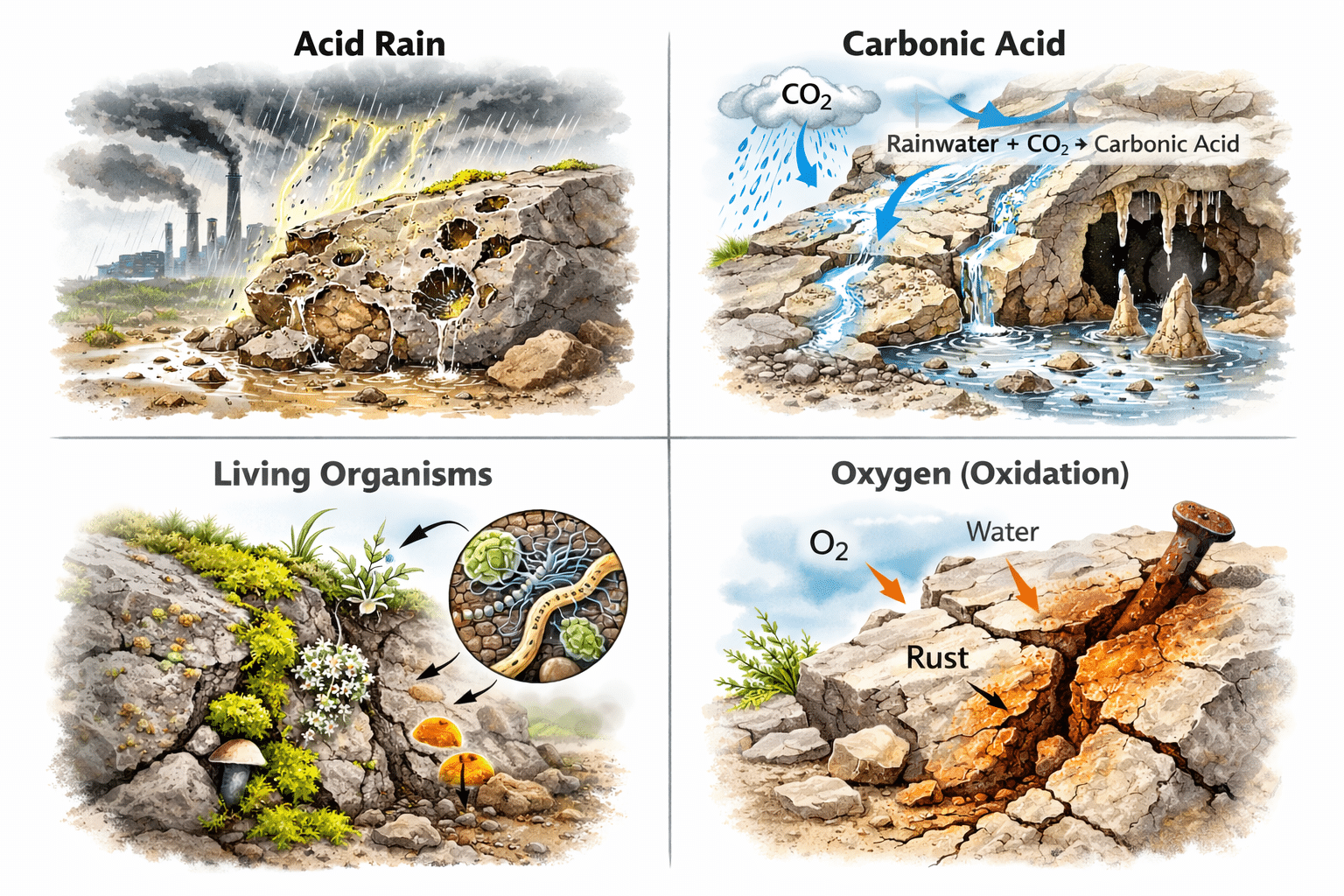 Chemical weathering happens when substances react with minerals inside rocks. Water is the most important cause of chemical weathering because it can dissolve certain minerals over time. For example, oxygen can react with water and with iron in rocks, causing a process called oxidation that forms rust. Carbon dioxide in the air can mix with rainwater to form carbonic acid. This weak acid easily weathers rocks such as limestone and marble. Living organisms contribute to chemical weathering as well. As plants grow, they produce weak acids that slowly dissolve rock around their roots. Human activities can also increase chemical weathering. Acid rain, which forms when water vapor reacts with gases released from burning fossil fuels, increasing the rate of chemical weathering by making rainwater more acidic.
The type of rock and the climate both affect how quickly weathering happens. Climate refers to the usual weather conditions in a region. Warm, moist climates often speed up chemical weathering, while cold climates may increase mechanical weathering through repeated freezing and thawing. Rock composition also matters because some minerals dissolve more easily than others.
Mechanical and chemical weathering often work together. Chemical weathering can create holes or weaken parts of a rock, making it easier for mechanical weathering to break it apart. When rocks break into smaller pieces, more surface area is exposed, which allows chemical weathering to happen even faster. Over time, these processes continuously shape and change Earth’s surface.
Review:
- Explain the difference between mechanical and chemical weathering.
- Identify three causes of chemical weathering.
- What two factors determine the rate at which weathering occurs?