
Section 2: Animal Behavior
Understanding animal behavior begins with examining how an organism interacts with other living things and its environment. For example, watching a bee gather pollen or a beaver build a dam reveals patterns in how animals survive and meet their needs. These behaviors are often triggered by stimuli, which are environmental cues that cause a response. Whether an animal is searching for food, avoiding predators, or finding a mate, it depends on its senses—sight, smell, touch, taste, and sound—to interpret these cues and respond effectively.
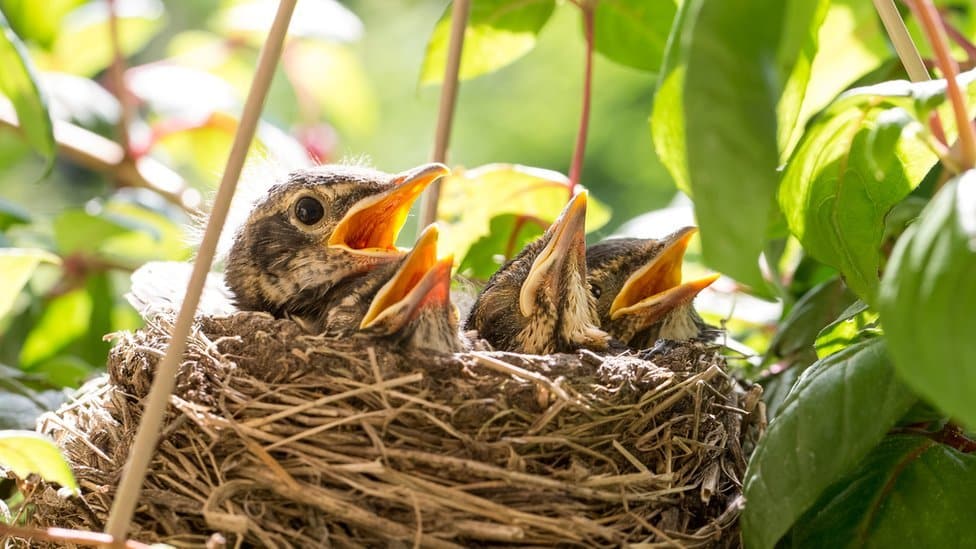 Many behaviors animals display are innate behaviors, meaning they are present at birth. These behaviors, also called instincts, do not need to be learned or practiced. For instance, a house spider instinctively knows how to spin a web. A specific type of innate behavior is a reflex, which is a quick, automatic response to a stimulus, such as sneezing or blinking. These immediate reactions help protect the organism and support survival.
In addition to innate behaviors, animals also develop learned behaviors over time through experience and practice. One example is imprinting, which occurs when a young animal forms a strong attachment to another organism shortly after birth or hatching, often helping ensure its safety. Another type is conditioning, where an animal learns to associate a behavior with a consequence. For example, a bee may return to a flower after previously finding nectar there. Some animals also demonstrate insight, using past experiences to solve new problems. Chimpanzees, for instance, have been observed creating tools to help them access food, showing advanced problem-solving abilities.
Many animals live and function within social groups, adding another layer of complexity to behavior. Species that live in groups often depend on cooperation for survival. Lions, for example, live in groups called prides, where they work together to hunt, defend their territory, and care for their young. Group living increases their chances of success when capturing prey and provides protection from threats. Similarly, many other animals rely on communication and cooperation to find food, reproduce, and survive in their environments.
Together, innate behaviors, learned experiences, and social interactions shape how animals respond to their environment, highlighting the complexity and adaptability of life in the animal kingdom.
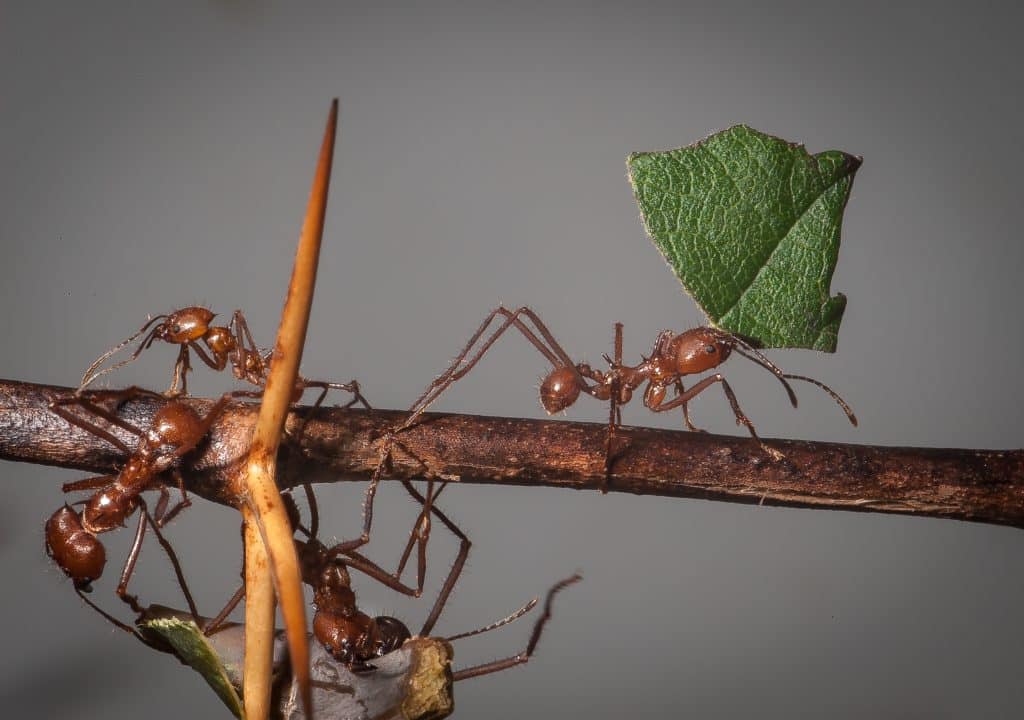
Effective communication is a key factor in how animals survive and function in their environments. For example, leaf-cutter ants live in highly organized colonies where each individual has a specific role. Some ants gather leaves and carry them back to the nest, while others clear pathways or inspect them for parasites. These groups rely on signals—such as touch and chemical trails—to coordinate their work and maintain the colony.
Animals communicate in other ways as well. Some animals use light, such as fireflies that flash to attract mates or warn predators. Others, like bats, dolphins, and shrews, rely on sound through echolocation to navigate and find food in the dark. Many animals also use chemical signals, called pheromones, to communicate. These scents can mark territory, warn others of danger, or attract a mate. Each method allows animals to send and receive information, increasing their chances of survival.
In addition to communication, many animals display cyclic behaviors, which are patterns that repeat over time. These behaviors are often linked to changes in seasons or environmental conditions. Migration is one example in which animals such as birds travel long distances between feeding and breeding areas. Hibernation is another cyclic behavior, in which animals like bears enter a state of reduced activity during colder months to conserve energy when food is scarce.
Together, communication and cyclic behaviors show how animals respond to environmental changes and, when necessary, work together or adapt over time to survive in a wide range of habitats.
Review:
- Describe characteristics of innate behaviors.
- How do animals communicate?
- What is cyclic behavior?